Goats, Dogs, Ducks, Chickens and More!

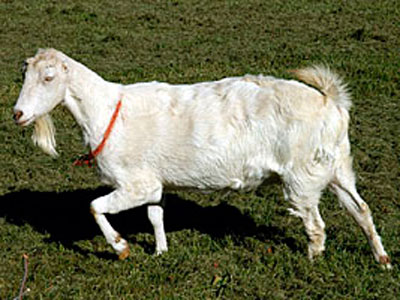
Today my friend and photographer extraordinaire Melissa Kotacka and I made a special trip to Rougement to visit Elodie Farms. It’s even more beautiful in person; in fact, it’s reminiscent of Marie Antoinette’s Petit Hameau in France. But unlike that fabled retreat, Elodie Farms is an authentic dairy, where owner Dave Artigues milks his goats by hand twice each day.

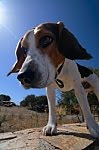
Gus, a brown lab and Lulu, a loquacious Chihuahua mix, greeted us first. As we wound our way to the dairy, we encountered roosters and ducks. The “kids” (teenagers, really) were the first of the goats to peek out. Curious, playful and friendly, they clambered to the gate for a first-hand view. A protective doe circled, not so sure. We soon made the acquaintance of Dave himself, who years ago decided to trade his clinical psychiatry work for dairy farming and hasn’t looked back since. His journey sounds a little like that H.T., the reluctant hero of Naked and Hungry.
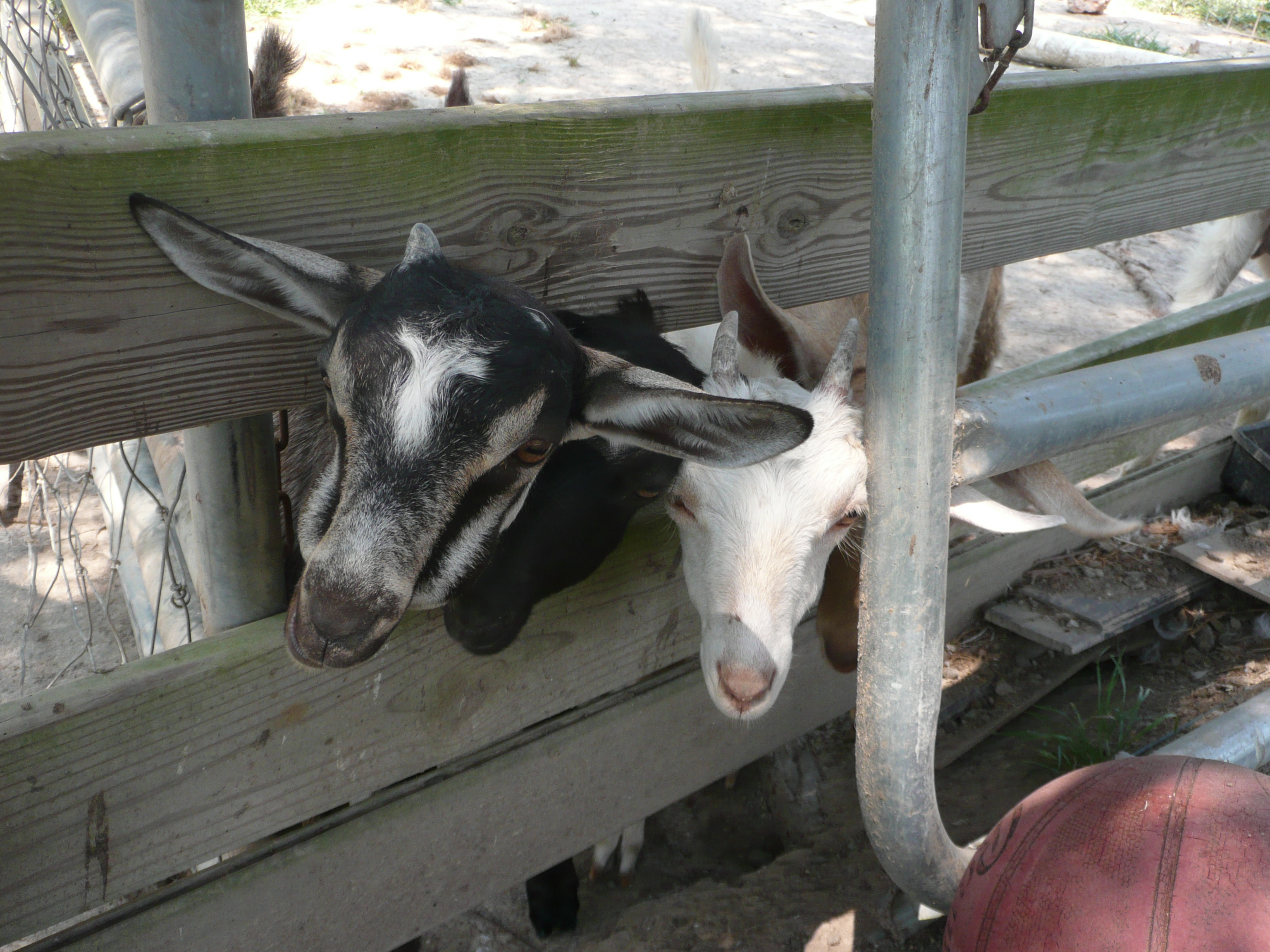
So where was Bermadean, the fictional goat in Naked and Hungry? You decide! If you want to know for sure, join us on August 6, for a tour of the farm and a special reading of the book in celebration of sustainable agriculture in North Carolina.

For more, check out Melissa’s beautiful photo-essay on our trip.
August 6 – Naked and Hungry Goes to Elodie Farms!

Save the date! On August 6, Naked and Hungry is delighted to be the guest of Elodie Farms, the Piedmont’s premier goat farm and maker of delicious farmstead goat cheese.

This partnership is inspired by Myrtle, my main character’s mother, who never goes anywhere without her pet goat, Bermadean.

At this special event, we’ll have a reading from Naked and Hungry (featuring the appearance of Bermadean), followed by a tour of a tour of Elodie Farms, which is situated on 21 acres of beautiful farmland in northern Durham County. The rustic charm is reminiscent of Winnabow County, the fictional setting of Naked and Hungry. Details are still emerging, so please stay posted to this blog for more information. We hope you’ll plan to join us!

Naked and Hungry in Carrboro!

A BIG thanks to all of our friends from Art4Aid.org in Carrboro for hosting the first signing event for Naked and Hungry. It was a great turnout…with both old and new friends. The event was one that my main character. H.T., would have simply loved, especially the delicious barbecue and cornbread. Not to mention the prevalence of flip-flops! Special thanks to childhood friend Callie Hammond who came all the way from Sanford and Kevin and Dani who drove up from Charlotte. And an extra special thanks to all those who bought my book and WERE NOT blood relatives. Wow! And as my blood relatives know, I owe them far more than I could ever pay!

In spite of the forecast, the weather held out, and we were able to chat outdoors under a beautiful canopy of trees. There I read two short excerpts, including the first scene between H.T. and his future love interest Jessica Beane, and the darkly humorous episode in which H.T. overhears the bad guys plot his death.  That scene, appropriately enough, was also at a barbecue.

“You know you could go to jail for threatening us with a deadly weapon,” says one of the villains, when H.T. pulls out his nail gun to defend himself. “I didn’t threaten anyone,” says H.T. “But if you don’t hand me my flip-flops, I’m going to sink a few nails in Earl’s Cadillac and that would only be a misdemeanor.”

The publisher was kind enough to provide a limited supply of promotional copies for sale in advance of the November release. So please stay tuned to our events page for more signings in the near future. And if you have a group of friends who might be interested in hearing me read from the book this summer, be sure and email me.  We’ll talk about the book, our shared love for North Carolina, crepes and more!

Ten Ways to Beat Summer Boredom

As summer sets in and those interminably long days drag by—especially in a small town like Yatesville—you may find yourself the victim of something far worse than a raging case of poison ivy. Boredom! If so, H.T., the main character of Naked and Hungry offers the following tips:

  1. Give a stray dog a square meal and a dry place to sleep—you’ll have a friend for life.
  2. Buy a failing business and hire the two most desperate people you can find—you’ll be forever entertained by their bickering.
  3. Move a sleeping bag to the porch and fall asleep to the cacophony of cicadas.
  4. Make friends with someone worse off than you…even if you have to travel to the other side of the county to find him.
  5. Treat yourself to fried chicken, ketchup potatoes, squash pickles and strawberry congealed salad.
  6. Call up your best friend and relive your favorite high school prank. When the laughter dies down, embellish accordingly.
  7. Pretend you have amnesia for the weekend. Try not to forget.
  8. Threaten three men with a nail gun and spend the night in jail.
  9. Find your fourth-grade tonette and see how many variations of “Hot Cross Buns” you can play.
  10. Attend the Art4Aid.org Charity BBQ on May 28!

Dig Deeper

I recently read a profile of writer Pat Conroy and his wife, Cassandra King, also a novelist. I can’t remember his exact words, but in the article, Pat stresses the importance of “digging deeper” when he reaches an impasse in his writing. The answer is there, but he must dig deeper within himself to find it.

As an itinerant gardener, I found this advice to be very useful. My efforts are mostly confined to container gardening—quick payoff for minimal effort—but I’ve always admired the true gardeners, those who know what they’re doing. They’re willing to invest the time to make sure the soil is properly prepared. They, too, “dig deeply” to tender the loving care necessary to yield maximum blooms.

It’s the same way with writing. When I’m struggling, I can drift off the page for “research” but the truth is that most solutions are within my reach if I think carefully enough. Curiously, some of the best solutions happen when I’m not writing. They happen when I’m gardening, cooking, or walking the dog. Or, they can also arise during time spent with other writers.

Yesterday, I had the privilege of attending a workshop hosted by the Burlington Writer’s Club in Graham. Young adult writer Maureen Wartski, novelist and teacher, led a group of us on revision. From description to flashback, we spent time on the little tricks that writers use to propel their stories. At the end, she encouraged us all to created detailed outlines—much in the way that a gardener might create a landscape blueprint—to help guide our stories. The more I think about it, the more I realize how much writers and gardeners have in common. Gotta go…it’s time to prune my bushes!

Leaving A Trail

Last year I had the privilege of hearing Elizabeth Kostova, author of The Historian and The Swan Thieves, speak at the National Book Festival in D.C. about her personal writing process. She said that unlike some writers, she never plots too far ahead. Instead, she lets the story tell itself and trusts that all ends will fall into place eventually. While crouching on the grass in the heat, and trying not to worry about the camel cricket just inches away from me, I remember admiring her faith.

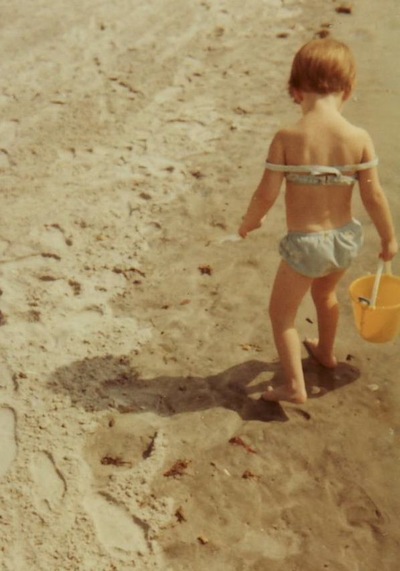
Just as this picture demonstrates, the trick for me is balancing my knowledge of the present moment with the trail I’ve got to leave behind me. It’s not easy to remember to plant nuance and clues for the reader. For the fiction writer can leave very little to chance.   If you drag a toe in the sand, there needs to be a reverse action that makes sense for the reader.

Now at work on my second novel, and thoroughly enjoying the new characters and complications introduced into the familiar town of Yatesville, I still work from a rough outline. It’s at the top of my file and serves as a guidepost of where I hope to end up. Not sure that’s the best way but it works for me. It’s like my little yellow bucket of shells. It’s a catch-all for the tidbits I can’t bear to leave behind.

Fiction As Social Discipline

The magnificent novel, The Imperfectionists, by debut author Tom Rachman, is a treasure trove of humanity. It is a book to be read over and over again. From loneliness to heartbreak, the author lays bare the universal emotions that unite us all. And yet, at its conclusion, I chanced upon another delight. In the back of the book, the author is interviewed by none other than Malcolm Gladwell, one of my favorite philosopher/authors.

Not only does this interview deliver great insights into the novel, but Malcolm, known for his nonfiction books, The Tipping Point and Blink among others, shares his insights on fiction:

“In a good book, we get an intimate and nuanced picture of someone–to the point where our own prejudices are completely displaced by the world created by the author. That’s an extraordinarily important kind of social discipline: It reminds us that an important part of what it means to be human is to replace our snap judgments about people with the empirical evidence they offer us.”

Va-va-voom! Upon reading this, I felt my heart swell with happiness. Malcolm had just articulated one of the many reasons that fiction appeals to so many of us. In this multi-tasking, technology-driven world, reading fiction takes on a new urgency. It’s not just leisure anymore, as Malcolm asserts, it’s social discipline. I’ll take that one step further: reading fiction is our duty!

St. Francis De Sales, Where Have You Been?

Dear St. Francis:

I must confess that I first learned of your existence just this past week, when my muse and fellow writer reminded me of the Catholic tradition of saints.

“A patron saint of writers? Come on,” I said in disbelief.

“There’s a saint for everything!” Melissa declared.

Thanks to Google (which, by the way, shares its first letters with your boss), we found your story immediately. So I ask, dear St. Francis, where have you been all my life?

Hearing about your difficulties made me feel much better about my own drudgery, which is nothing compared to your mission, I should say. But if you can write thousands of leaflets by hand and deliver them through miles of snow with bleeding feet, surely I can finish my second novel.

Your appearance this week brought blessings all around. For just two days after we found you, Melissa learned that her first essay (a literary tour-de-force, by the way) was accepted by a professional journal. St. Francis, please accept our heartfelt thanks for your role in this victory, and as we all have other such belles-lettres in submission purgatory, please do us a favor and give those pieces a similar nudge toward publication heaven.

Saying a prayer right now…


Who’s Driving the Car?

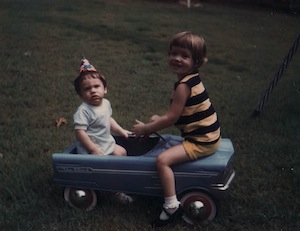
Lately, as I trudge through my second novel, I’ve found that my secondary characters are trying to hijack the story. As my little brother once discovered, one day you can be pedaling along in your brand new car, and next thing you know, big sis jumps onboard!

So what do you do? How do you put the wheel back into the hands of the main character?

First off, recognize that those minor characters need to have a voice. Why else would they be hammering so loudly in your head? Second, give them that voice by devoting some space to their back stories and motivations. Will you be able to use it all? Maybe not  yet. Putting it down on paper might just satisfy those pesky little voices. And hold on to what you write, because one day, those supporting characters could become the “stars” of another book. It certainly wouldn’t be the first time!