“Are You Too Deeply Occupied….Day 4

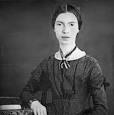
emilyto say if my Verse is alive?” wrote Emily Dickinson in 1862 to Thomas Higginson, the author and editor who would soon become her literary mentor. Today’s journey was primarily centered around this young poetess whose work (along with that of Walt Whitman) would launch the modern poetry movement.

Starting off in Amherst, we visited the Homestead, the site of the Emily Dickinson Museum, which was the first brick house in Amherst and also the place of her birth and death. In spite of her chronic illnesses, she produced an astounding amount of poetry (nearly 2,000 poems) known for its depth of emotion and unusual punctuation.

homesteadAmazingly, we had the same tour guide, Marianne, who led us through the house 3 years ago on a previous visit. Today’s visit was as instructive as before, when we learned that Emily’s white house dress, what she was known for wearing most of the time, was the modern-day equivalent of a sweatshirt and sweatpants. Jen was thrilled to hear this tidbit: “I live for things like this!” The tour also included a visit to The Evergreens, the house of her brother and sister-in-law. The later part of Emily’s life was marked by grief at the death of her beloved nephew, whose little suit is displayed in The Evergreens.

Marianne concluded our tour with a reading (This is My Letter to the World) in the garden, which was also dear to Emily. Here she spent many afternoons musing about nature accompanied by her Newfoundland Carlo.

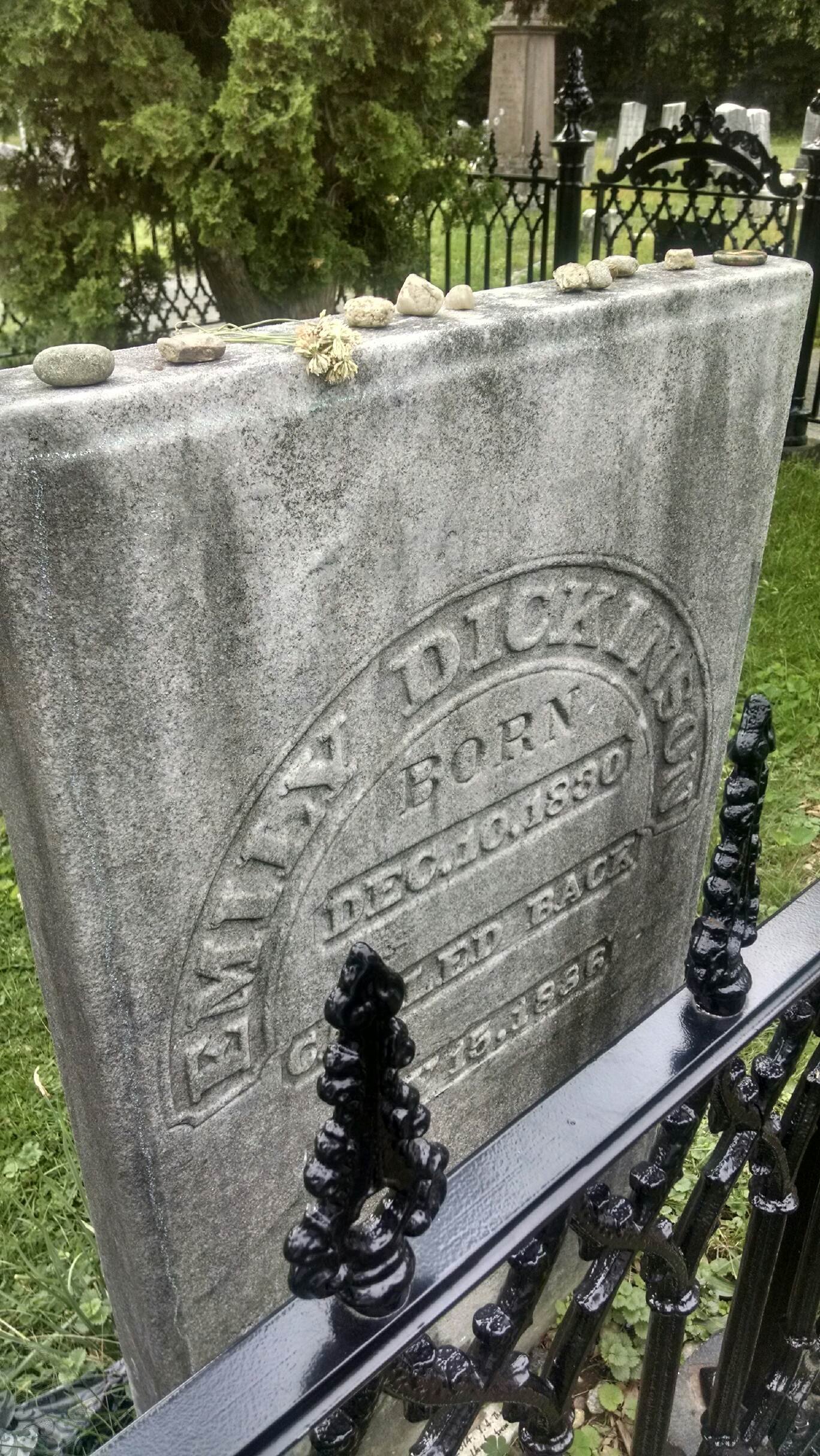
emily grave


I Have Drunk the Wine of Life at Last – Day 3

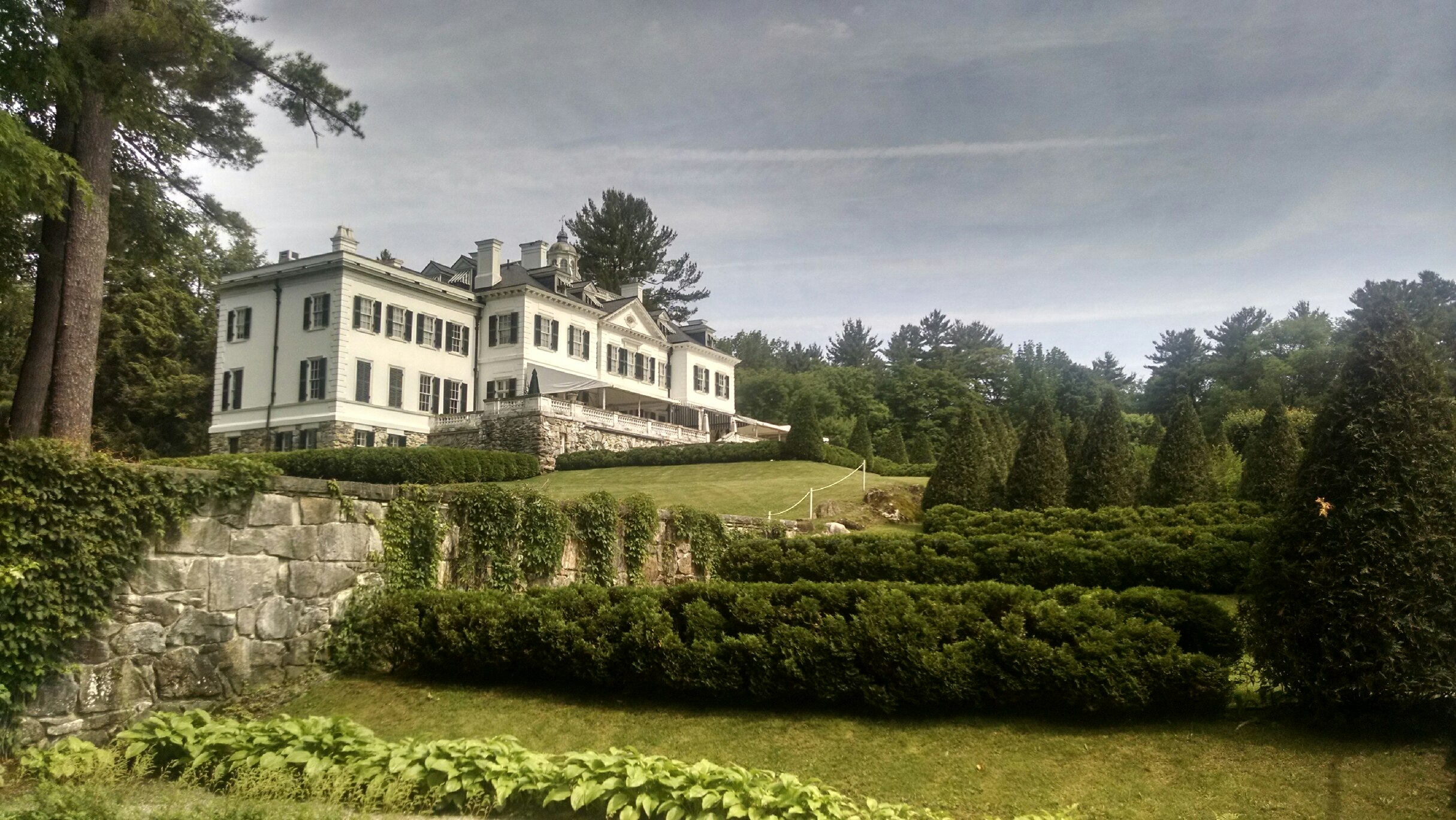
Today we journeyed to Lenox, MA, to The Mount, the home of writer Edith Wharton. Just like Millay, she defied social expectations for a woman of her time and pursued her intellectual ambitions to the highest degree.

Although most of her relationships with men (including her husband Teddy, whom she later divorced) were unsatisfying, she did have a few brief moments of happiness. As the quote in the title of this blog implies, she reveled in the good times. She cherished her friendship with ex-patriate writer Henry James, with whom she enjoyed a true marriage of the minds. They possessed “a sense of humor and irony in exactly the same key.”

Having only read Ethan Frome (Ann and I) and The House of Mirth (Jen), we were amazed to learn that Edith penned 40 books in 40 years!

mount1

Her first book was actually on interior decorating but she penned many other non-fiction books in addition to countless novels such as The Reef, Summer, and The Age of Innocence, which earned her a Pulitzer Prize.

Edith’s philosophy and intellect are reflected throughout The Mount, which made the visit all that more interesting. In contrast with other mansions of the Gilded Age (think Biltmore), The Mount was full of intimate spaces and natural light. We adored our tour guide, Cecily, who was charming, funny and smart. Cecily encouraged us all to read The Age of Innocence, claiming it was Wharton’s most accessible novel.

During the tour, we learned that “Edith liked her tables round, her lighting low, and the conversation sparkling.” Being dog lovers (Edith considered cats “snakes with fur”), we were thrilled to see that dogs played an integral role in her life. Her dogs slept on cushions under the table and dined from bowls of Chinese porcelain by the fireplace.
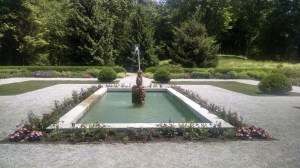
french gardens


Her gardens were equally impressive, with French- (above) and Italian-inspired designs. Not surprisingly, she even had a pet cemetery where several of her little darlings now rest in peace. Unfortunately, our visit did not conclude with a view of her grave, as she is buried in France where she spent the latter years of her life.

We next went to the nearby homestead of William Cullen Bryant, a writer and naturalist who was most famous for penning Thanatopsis, a mediation on death. While his home is now a National Historic Landmark, unfortunately for us, it was not open today. But we did peek inside the picturesque barn, which still had the individual house stalls and troughs.
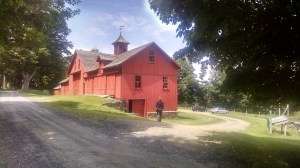
barn


Our tour for the day concluded in Northampton, where we strolled the grounds of Smith College, which prides itself on building generations of independent young females. Seeing a young woman seated by the Mill River Dam, where she laughed to herself as she leafed through a book, Jen quipped: “Now there’s a young woman who thinks for herself.”

And on that subject, tomorrow we’ll go to Amherst, the home of the notoriously independent-minded Emily Dickinson. It will be quite different from The Mount, as Emily never reached the fame of Edith in her lifetime, but given her talents, we expect to be equally delighted.
Edna St. Vincent Millay and Herman Melville: Day 2

Yesterday while making reservations for a tour of Steepletop, home of the poet Edna St. Vincent Millay in Austerlitz, NY, the tour director, Martha Rafterty told us to be prepared to be blown away. And we were not disappointed. The home and gardens are simply exquisite, the perfect homage to the life of this free-spirited and talented woman.

steepletop
Ann, Ashley, and Jen posing in front of the main house at Steepletop.


Millay, known as “Vincent” to her friends, earned a Pulitzer Prize for her work and was most known for her 1912 poem “Renascence.” In the twenties, she earned as much as $800 for her readings and frequently travelled the world until her untimely and mysterious death in 1949. Afterwards, her sister Norma moved into Steepletop and kept the estate intact, preserving items such as her clothes, furniture and books. Even today the gardens remain authentic, featuring blueberries, peonies, lupine, and her trademark strawberry shrub, the subject of another beloved poem.

strawberry-shrub

As hard as it was to leave Steepletop, we kept to our itinerary and travelled to Pittsfield, Massachusetts and Arrowhead, the home of Herman Melville, most known for his epic novel, Moby Dick. His literary fame was mostly posthumous, however, being more popular in his lifetime for real-life adventures among the cannibals of the South Pacific.

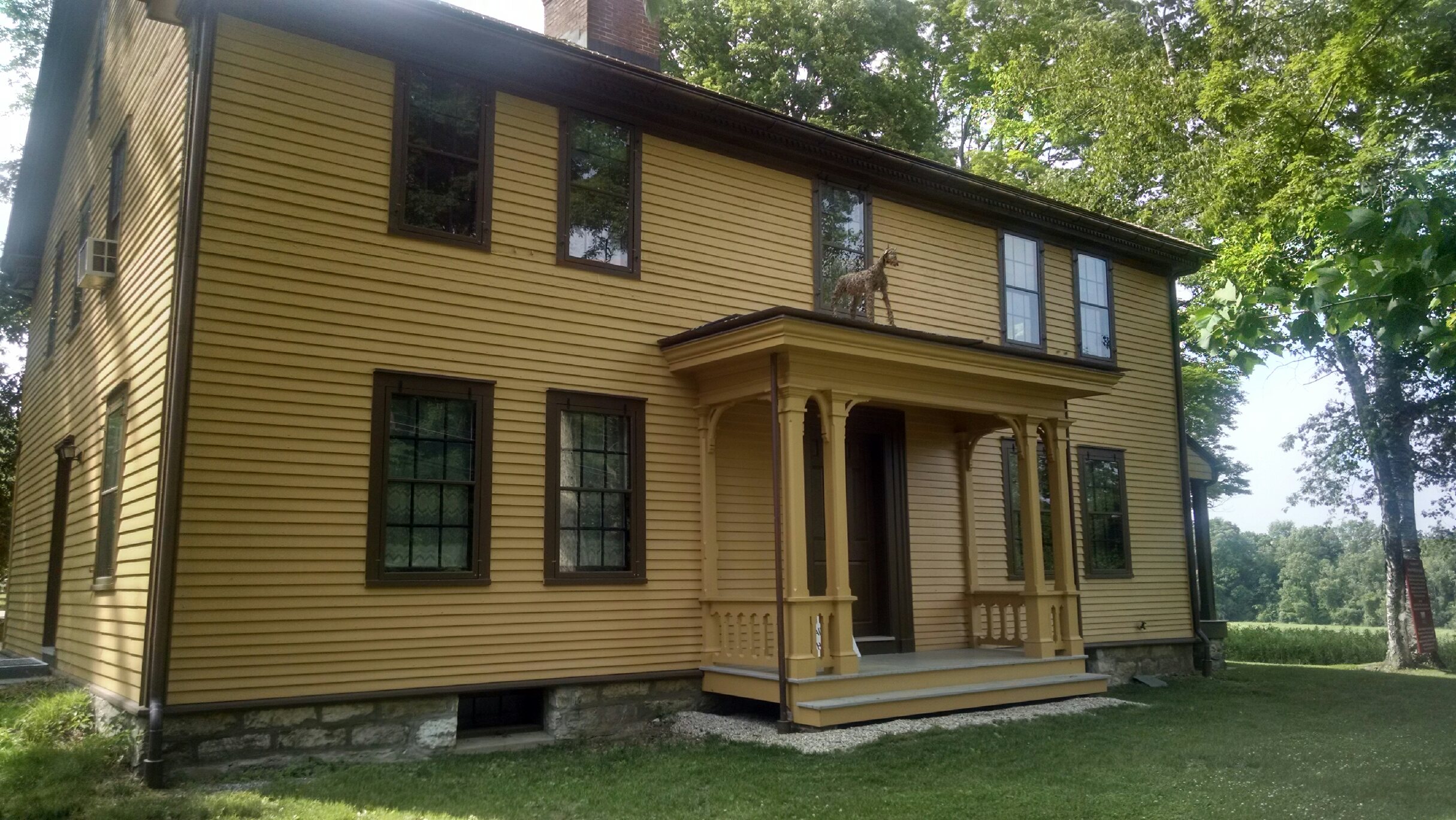
arrowheadArrowhead marked the height of his literary output, the location where he finalized Moby Dick and other novels and short stories, one of which, Billy Budd, remained unfinished at the time of his death. Although plagued by insecurities and alcoholism at the end, his granddaughter Eleanor became his literary executrix and thanks to her perseverance, Moby Dick finally received the recognition it deserved.

Although little original furniture remains, the estate includes the fireplace, which is inscribed with Melville’s writings and the study where he secluded himself to write and escape the mayhem of his four children. Arrowhead overlooks a whale-shaped mountain in the Berkshires (Mt. Greylock), which reputedly inspired Moby Dick.

desk
Melville’s study with a replica of his writing desk.


The adventures continue tomorrow with a short drive to Lenox, home of The Mount, the extraordinary estate of Edith Wharton, famous novelist and interior decorator. Stay tuned!

Summer Literary Tour of New England: Day 1

Today was the first day of a much anticipated American Literary Tour through New England. My friends Jen and Ann and I kicked off an eight-day blitz through some of the famous sites of American Literature.

We began by stopping in Richmond, home of the Edgar Allen Poe Museum. Although Poe never lived here, it is the oldest building in Richmond, constructed entirely of stone. He spent some of the happiest years of his life in Richmond and considered himself more of a Southerner than a Bostonian, although he was born there.

poe

The museum featured personal possessions of Poe, including one of the few extant handwritten poems to a childhood girlfriend, “To Helen”; a trinket box owned by his wife, Virginia; his trunk; and even a lock of his hair. None of the houses where he lived while in Richmond still exist, but the museum features several pieces of furniture, including his boyhood bed, pictured below.

bed

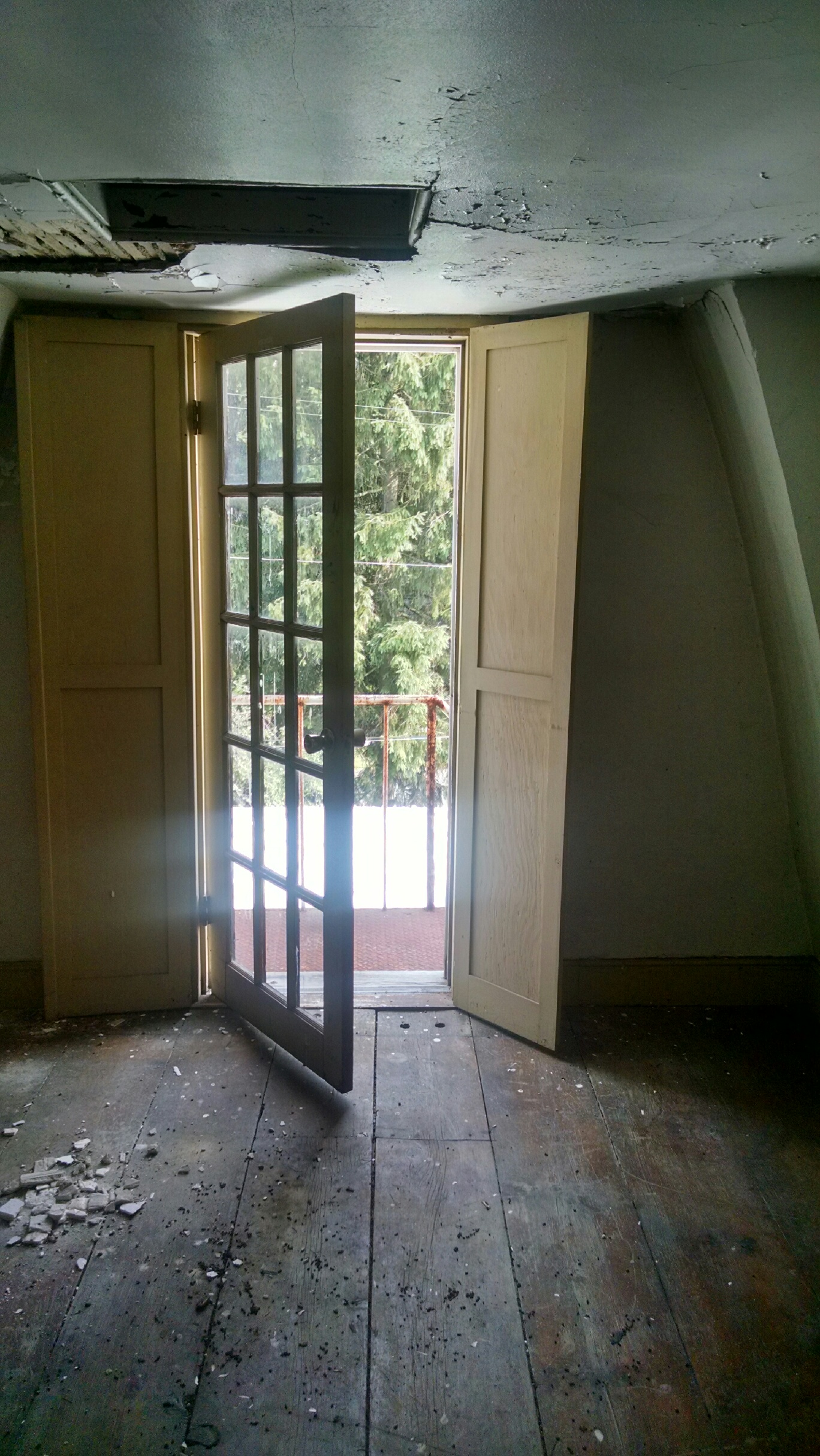
Next, we went to Potters Mill, Pennsylvania, the location of Eutaw House, a tavern built in 1794 and reputedly the site where Poe penned his most famous work, The Raven. Today Eutaw House is home to a used car lot and has been made into apartments. We feared it was inaccessible but the adventurous Ann (at her most brazen) charged through the lawn, unlatched the gate, and climbed up the steps to the third floor. The picture below shows the room where he allegedly wrote this poem. Inside you could sense the ambience that inspired his poem.

raven

“And the Raven, never flitting, still is sitting, still is sitting
On the pallid bust of Pallas just above my chamber door;
    And his eyes have all the seeming of a demon’s that is dreaming,
    And the lamp-light o’er him streaming throws his shadow on the floor;
And my soul from out that shadow that lies floating on the floor
     Shall be lifted—nevermore!”
After polishing off a couple Amish Whoopie pies, we journeyed to State College, where Jen’s parents Janet and Scott live. They are kindly hosting the first and last night of our tour and treated us to wine and a homemade pizza buffet.
pizza2
Tomorrow we plan to get up at the crack of dawn and travel to Austerlitz, New York, and the home of poet Edna St. Vincent Millay. Stay tuned for the next edition of our journal, which will feature highlights of our journey. In addition to stops in New York, we’ll go to Massachusetts and Connecticut.

The Way the Rain Works

Ralph and Ashley
Photo credit: Mary Barnard


Here I am posing with award-winning poet Ralph Earle, who kindly autographed a copy of his book,  The Way the Rain Works. To the folks gathered at the Central Carolina Community College Creative Writing Program’s Open Mic Friday night, he treated us all to a few sample poems.

the way the rain works

If you haven’t yet read The Way the Rain Works, you should do yourself a favor and order it today from Sable Books. The individual poems weave a powerful and poignant story about the slow dissolution of a family. There is great sadness, yes, but there are also touches of humor (“The Insulating Properties of Trees” and “Sweater Weather”, for example).

The primary landscape, North Carolina, is familiar but at the same time, new again, through Ralph’s intellect and imagination. In “The Mill Dam at Bynum” he writes: “In the summer I wander the overgrown farm road / like Whitman, mad and undisguised, observing / how broad the river grows there, how poised.”  I am not the only one who will never think of the Bynum mill dam in the same way again!

There are many other gems, from “The Flight Back Home” to “The Sea and Sand Did This” to the title poem itself. For me, the best way to summarize my own personal experience with this book is in the concluding lines of “Snow Falling Silently”: “No matter how often / we start the story / differently, it ends / the same: water flows,/ Night grows old./ Snow falls in the silence.”

A number of other writers regaled us into the evening at the Open Mic, with diverse poems and tales of deviled eggs, dancing queens, fathers, birdsong, crisper drawers, and much, much more. A huge thanks to the members of the Board (in addition to Ralph) who organized the evening: Maggie Zwilling, Kim Overcash, Judith Stanton, Michele Berger, and Mary Barnard (who doubled as poet AND photographer for the event).

If you missed it, no worries. Stay tuned because we’ll do it again in the fall!

Join us on Friday for the CWP Open Mic!

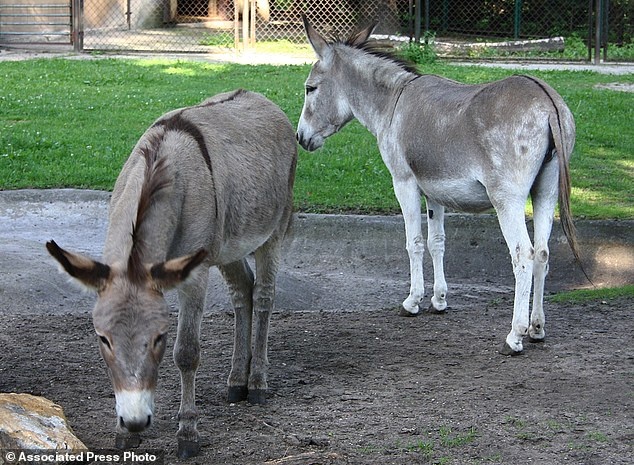
FILE - In this file photo from Aug. 11, 2010, two donkeys, Napoleon, left, and Antosia, stand near each others at a zoo in Poznan, Poland. The two were separated recently because of an outcry over their lovemaking, but have been reunited. The couple, together for 10 years, got into trouble when mothers expressed outrage that children had to witness their mating. (AP Photo/Joanna Piechorowska, File)
Real-life lovers Napoleon (left) and Antosia at a zoo in Poznan, Poland.

Made plans for next Friday night? If not, plan on joining us at the Spring/Summer Open Mic for the Central Carolina Community College’s Creative Writing Program. It will be Friday, May 29, 6-8 PM in the beautiful Chatham Community Library, Mary Hayes Holmes Room, in Pittsboro, N.C.

If you’re interested in reading your prose or poetry, please sign in upon arrival.  We’ll follow the order on the list, and you’ll have up to eight minutes. In addition to the reading, light refreshments will be served, another reason why you shouldn’t miss this event. If you don’t want to read, no worries, it’s still a lot of fun to hear the work of other local writers and mingle with the crowd.

I plan on reading 3 of my poems, one of which (“Napoleon and Antosia”) was inspired by two amorous real-life donkeys in Poland.

This piece was the result of another one of my most favorite poetry prompts  (source: The Practice of Poetry, edited by Robin Behn and Chase Twichell). You choose a story from the tabloids, write a poem in third person, and, as outrageous as it may be, take the story perfectly seriously. Oddly enough, this may lend your poem a bit of magical realism! I penned this poem during a class by Ralph Earle this fall and at his direction, wrote it with two different sets of line breaks.

While the National Enquirer and Star tend to focus more on celebrity news these days and unfortunately print less of those wacky stories such as “Alien Abducts My Wife” (remember those?), thanks to Reddit, you can find a wealth of these stories on this internet-based site, such as “Woman Lives with Mother’s Skeletal Remains for Years” or “Enchanted Creature Dances Beneath Icy Waters in Norway.”

Let your imagination run free and who knows how far you will go! Have fun writing, and we hope to see you at the Open Mic next Friday!

A Very Poetic Walk in the Woods

Sunday, May 3, was one of those days simply made for poetry. Blue skies, dazzling sunshine, and a walk through land virtually untouched by humans. A Carolina day free from humidity is truly a gift!

Our writing group was fortunate enough to have the opportunity to visit with Robin and her husband Wayne, a walking encyclopedia of history and natural science, especially forestry. They are the stewards of one of the dwindling parcels of land not yet affected by the growing development in Chatham County.

IMG_1666
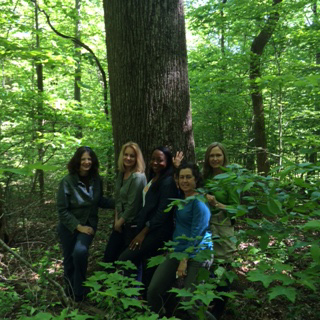
Wood sprites, fairies, or poets? What do you think?

Their land includes a natural spring, Landrum’s Creek (home to river otters!), and New World trees rarely seen in subdivisions these days: beech, ash, red oak and hickory. Here we are posing in front of an estimated 250-year-old mockernut hickory tree (identified, of course, by Wayne).

Nature walks, a ritual prescribed by Susan Wooldridge in her book Poem Crazy, are like oxygen to poets. Susan recommends regularly immersing yourself in nature and learning the names of flora and fauna. While we didn’t get lucky enough to see an otter (be still my heart…can you imagine?), we did spot a skink, a hawk, butterflies, centipedes, woodpeckers, and the one thing that makes you dread warmer weather: ticks! But even these pesky little creatures have earned their place. Hummm….a poem about ticks, now there’s a subject rarely touched.

Robin was an especially thoughtful hostess, as she and Wayne had thought ahead and plunked down a brand new picnic table right in the middle of the clearing. This was a perfect spot for pita chips, hummus, ginger ale, and what else? Strawberry shortcake!

IMG_20150503_112334505_HDRHere is Wayne, our intrepid field guide, who is enjoying his own well-deserved plate of cake. We are so grateful to him for his willingness to lead us through the woods and answer our endless list of questions? Is this a maple? Why is this bark so rough? Can we drink from that spring? I’ll give his answer to the last question, mine, out of due diligence. Sure, he said, if you’re used to all those microbes in your system. That was enough for me!

Shortcake was certainly in order given our group’s recent accomplishments. We found out that Carolina Crimes: 19 Tales of Love, Lust, and Longing, which includes a story (“Happy Pills”) by our writing group member Linda Johnson was nominated for a 2015 Anthony Award. This anthology was edited by local writer and editor Karen Pullen and includes tales from other acclaimed writers such as Ruth Moose, one of our group’s favorite writing teachers at CCCC.

And….just in time for Mother’s Day, we also learned that another member, Michele Berger, had a piece of her writing selected for a national anthology: A Letter to My Mom: A Tribute to Our Very First Loves. In this beautiful book, Michele shares her own heartfelt message to her mother in a collection of personally-crafted letters written by people from all walks of life, including celebrities (Dr. Phil, Suze Orman, and Mariel Hemingway, just to name a few!). Read more about Michele’s experience on her own blog. What I love about this book is that it represents just a fraction of a community of people who want to express their love and admiration for their mothers. In fact, you can even share your own letter on their website.

Whether it’s walking in the woods or celebrating your own mother, I hope that you will find your own inspiration in your own space and that the writing flows as freely as it does in Landrum Creek!

Vision & Voice Poetry Project!

Ashley_vision1Ashley_vision2Yesterday, Sunday, April 26, I had the honor of reading a poem at the 4th Annual Vision & Voice Poetry Project at the Joyful Jewel in Pittsboro, a local art gallery specializing in original arts and crafts. Once every year, they open their doors to local poets who, in the style of poetry known as Ekphrasis, write a poem inspired by a piece of art. I chose as my inspiration the beautiful photograph of a snowy egret by Gerald Dukes (kindly held by local artist. D.G. Chandler). If you like, you may read my poem here.

Ashley_vision_3

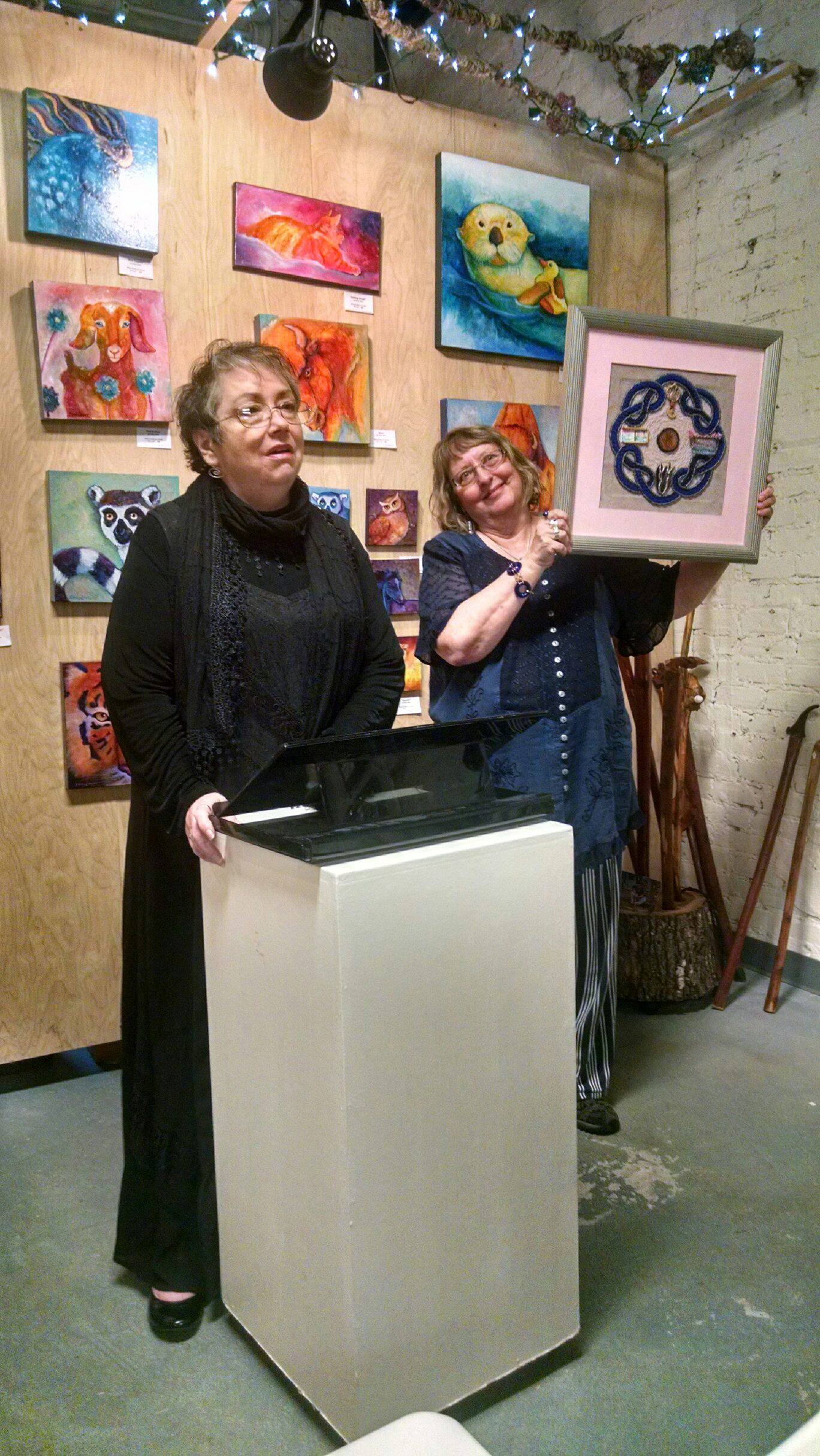
Pictured above is the poet Candace Falloon reading a poem inspired by proprietor Mariah Wheeler’s (also pictured) lovely work of mixed media titled The Muse Calls.

A number of other local poets read, including Mary Barnard, Judith Fisher, Tim Keim, Judith Stanton, Patty Cole and Judy Hogan, who emceed the event. In addition to Mariah, we took our inspiration from a bevy of talented artists including D.G. Chandler, Jerry Fowler, Orlan Johnson, Jacquelyn Lowry, Kate Ladd, Marilyn Penrod, Stacy Lewis, Sharon Blessum, Gerald Dukes, just to name a few. Our subjects of inspiration ranged from the expected (paintings, photography and sculpture) to the more esoteric (dream catchers, jewelry, scarves, even a peppermill!) Poets Ruth Moose, Bonnie Korta, and Sheridan Bushnell couldn’t attend but other poets happily read their work so their voices could also be heard.

If you missed the event, no worries! There’s still time to order a limited edition copy of the poems and images of the art that inspired them for just $35. To do so, contact Mariah at mariah.joyfuljewel@gmail.com. Need a special gift for Mother’s Day? Stop by the Joyful Jewel today — there’s something for every woman in your life, I promise!

In fact, I just bought a pair of earrings for a friend for a birthday present who told me that she absolutely loves them and will treasure them every day!

Carolina Woman!

Carolina Woman

Local contests are a great way to share your work….and win prizes! My writing group member Linda Johnson and I both earned Honorable Mentions in the 2015 Carolina Woman Writing Contest. Matching pajama-size T-shirts!

Linda won for her short story “Birthday Cake” (penned in a fiction class led by Ruth Moose) and I won for my poem “Ode to My Ironing Board” (written in a class led by Ralph Earle). Both classes were held through the Creative Writing Program at Central Carolina Community College’s Pittsboro campus. We also learned that a CCCC workshop leader, Tara Lynne Groth, won for her story “Money Changes Everything.” All pieces will published by CW in an upcoming issue. Pittsboro represented very well at Carolina Woman this year!

On a related note, and since April is National Poetry Month, I had to point out that today would have been the 115th birthday of another writer, novelist, short story writer, and poet Vladimir Nabokov. I didn’t know he also wrote poetry until my friend Mary located “The Poem” — a piece written by him for one of  just two collections penned in his prolific career. As with his other work, “The Poem” is poignant, evocative and lush with language and imagery that would make any writer envious. I couldn’t find an online link so unfortunately (or fortunately!), you’ll have to do like me and order a copy of his collections.

More coming soon!

Fun with Random Phrases, Part II

phrases
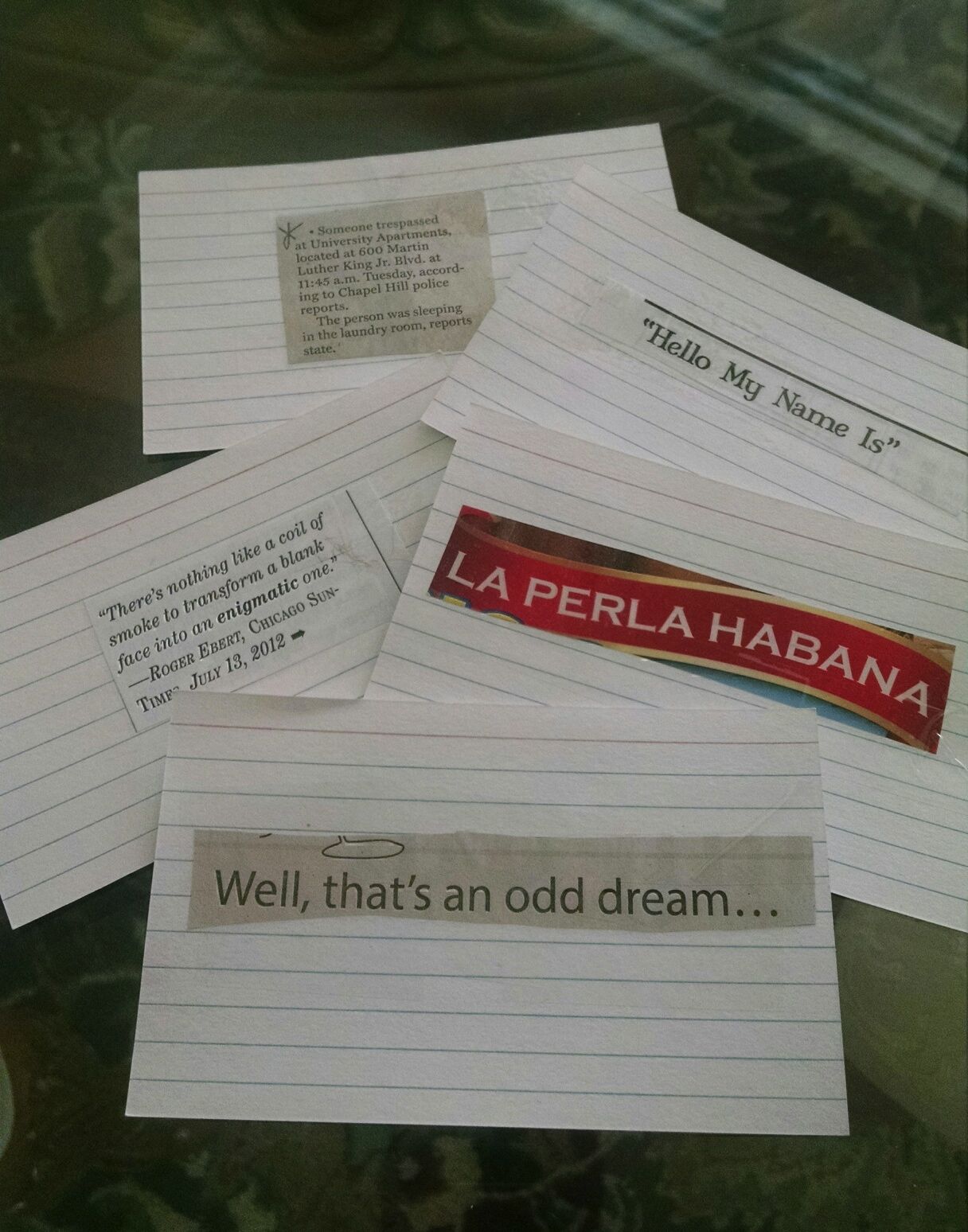
Phrases can come from catalogs, newspapers, magazines, or even conversations!

As promised, in celebration of National Poetry Month, I am continuing to post sample poems from our workshop last month. This time, with kind permission from our poets, I will post two poems created through random phrases, one of my most favorite ways to generate poetry. I love random phrases for many reasons but primarily because it helps the poet free herself from the usual writer’s block of a blank page.

For our exercise, each poet drew two cards blindly from a pile of assorted random phrases that I had been collecting for some time. The poet had the option of uniting the phrases into one poem or writing two separate poems.

Jen drew a quote by Roger Ebert and a quote from an article about Lake Superior State College’s unicorn questing privilege program. She chose to write two separate poems. I’ll post the unicorn poem.

ARE YOU ONE OF THEM?

If you believe in fairies and smurfs
and life beyond the stars
then you might be eligible
for a “Unicorn Questing Privilege.”

The Lake Superior State University
Is granting licenses now, first come
first serve, to all those interested
in hunting unicorns.

Did I say hunting? No, no
not hunting. This is a “questing” license
A catch and release program.
All unicorns must be returned
to the wilds of your imagination.

So I ask again, are you one of them?

#####

Jen’s love of animals, even imaginary, and her sense of humor are clearly apparent in this gem!

Rosalie drew cards on a brand of cigar (taken my husband’s cigar catalog) and the phrase: “Hello, my name is.” She was inspired to combine both phrases and being Italian, she chose to put her own spin on it!

NAMES IN SMOKE

Ciao, mi chiamo Rosalie
You say you’re on your way to the cabaret—by the beach? Rte. 64?
Yes, I’ll come along.

Isn’t that where the old carved Indian sits outside of the cigar store?
They sell La Perla Habana.
Ohhh—so you smoke them?
Ah-h-h
Yes, yes, quite an aroma!

Does it linger on your fingers?  Your clothes?

What say we stop there—together—
to inhale some interesting smells

What?—-my name?
Again, my name is Rosalie
What’s yours?

#####

Thanks to Rosalie’s imagination, I can just smell cigars by the beach, can’t you? I have been transported without having to leave my house. And this is the beauty of poetry, and art in general, don’t you think?

In addition to exercises on imagery and random phrases, at our workshop we also created poems out of a series of questions. Next time, I’ll post a poem created by Jane that demonstrates just how the simplest of questions can create another kind of journey, equally evocative.