A New Year’s Resolution: 5 Easy Steps for a Pain-Free Year of Blogging

IMG_3254I’ve decided to use the down time before the New Year to do something I’ve never done before: write a strategic plan for my blog. Allow me to confess. Other than scheduling some book reviews in advance last summer, I’ve just relied upon serendipity for my blog. While I’ll always leave room for sudden inspiration, I’m planning for a more meaningful (and painfree!) experience for 2013. Here’s 5 steps that might help you.

Step 1: What are your writing goals for 2013? Before you address your plans for your blog, ask yourself: what are my writing goals? For maximum benefit, the two ought to be aligned. Do you want to find a publisher for a completed novel? Do you want to create a following for your writing interests in the hopes of bringing people together? Or, do you want to explore a new topic in the interests of learning something? My overall mission (as a writer) is fairly simple and it’s in the tagline of my blog: Exploring the joys of fiction writing and learning from the very best.  With this in mind, my goal for 2013 will simply be to improve my writing. I’ll then create a blogging plan that supports this goal.

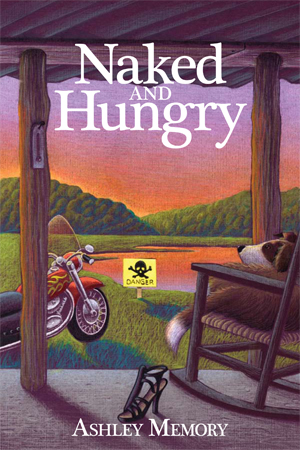
Step 2: Take advantage of holidays, birthdays, and other milestones. It’s common sense to celebrate your own writing milestones and traditional holidays such as Valentine’s Day. But one of my favorite things to do is to take advantage of the abundance of wacky holidays. This worked well for me last year, as I was heavily promoting Naked and Hungry. In honor of one of my main characters, a cantankerous canine, I blogged about National Mutts Day. Which bizarre holidays (tied to your own writing goals) can you commemorate? Check out the list for 2013. And a year’s worth of blog entries means that somebody’s going to have a birthday. Will I have a blog entry for Flannery O’Connor or Anton Chekhov, two of my writing idols? You betcha! On this subject, why not celebrate a victory or milestone earned by a writer friend? I promise that this will be time well spent.

Step 3: Link to other blogs or websites. Have you been interviewed on a blog or garnered a new review? Did you read an online article that you applied to your own life? These can be the simplest of blog entries. You need only write a paragraph from your perspective and link back to the article or interview itself. This can be made easier by subscribing to other blogs or newsfeeds as a way to get ideas. I recently read a great article that could easily inspire multiple blog entries of my own. Conversely, did an article or opinion rub you the wrong way? Don’t be afraid to write about a controversial topic. Hemingway made a living doing just that. Can you imagine the following he would have generated if he had had a blog?

Step 4: Interview another writer. Whether you’re a writer, chef, or gardener, you’re bound to know others with similar interests. Let their wisdom be a part of your blogosphere. I need to get better at this. It can be as simple as emailing other writers questions ahead of time and asking for a picture. Easy-breezy. They do the writing and you do the posting!

Step 5: Give yourself a vacation by writing in advance. Take advantage of technology and schedule content ahead of time. You can create a “mini-series”, such as I did this summer with book reviews, parts 1 and 2. I scheduled them in sequence, which meant that I could take a vacation with impunity. Whew! My writing friend, Rick Bylina, is a natural at planning; in fact, he posts a book review at least once per week.

There are some technical things I should mention here, too, such as linking your blog to your Twitter, Facebook and LinkedIn accounts but I’m going to assume you have that figured out. As for me, I now have a smorgasbord of exciting blog entries planned for the new year. For your inspiration, I’ll jot down my own outline for January. It really can be this simple!

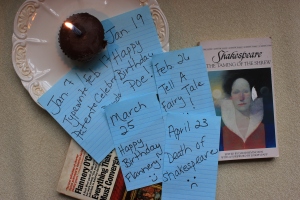
  • January 7 – Celebrate the patent of a primitive typewriter in 1829
  • January 8  – Ashley pens guest blog on Dames of Dialogue Blog
  • January 15 – Review of Write Like the Masters by William Cane
  • January 19 – The master of suspense: Edgar Allen Poe’s Birthday
  • January 29 – A storyteller for all time: Anton Chekhov’s Birthday

So now I’ll tackle February, March, April and so forth. With the time saved, who knows? Maybe, just maybe, 2013 will find me floating in a Bahamian bay reading a book!

Here’s to a great year ahead. Whatever your plans, may 2013 bring you bountiful rewards, enduring fellowship and joy!

Ashley
Writers and Cooks: Create A Digital Menu Board for the Holidays!

My mother is not a big eater, so naturally, she is not big on cooking. Every year for Christmas Eve, which we celebrate at my house, she tries to make it simple for me, the frustrated chef. This year, she has requested only one food item, grilled cheese sandwiches! It’s simply maddening! Grilled cheese for the holidays? Seriously?

So…wanting to make it special and taking a cue from the holiday issue of Southern Living, I decided to create a special made-to-order grilled cheese sandwich menu. At the last minute, I asked my husband to try and find one of those charming wipe-off menu boards, the ones held by a ceramic pig or French chef. As he was on his way to the golf course, he naturally found 1,000 reasons why this was a bad idea on the day before the day before Christmas Eve.

So on a whim, I decided to make the most of technology and create a powerpoint version of a digital menu board that I’ll display from my laptop. In terms of design, it’s fairly amateurish, but I’m thinking it will make things much simpler. The choices for our guests are clearly displayed, as is the note about self-service for beverages. It will be up to my husband to take the orders (hee hee) while me, the chef, operates the griddle.

Slide1


Writers are artists by definition so I’m including this menu here in the hopes that it might help you in your party-planning.

I’ve already envisioned tons of applications, from birthday luncheons to Thanksgiving meals.

Now, if I can just figure out how to keep my screen saver from turning on!

Happy Holidays to all of you and best wishes for a joyous New Year. Looking ahead, I’ve got a smorgasbord of articles planned for 2013 that will hopefully inspire your writing in the New Year.


Ode to the Exclamation Mark!

images-2In my studies of famous authors—most recently Flannery O’Connor and Ernest Hemingway—I’ve taken a delightful detour into Anton Chekhov, whom I’ll write about more later. Author of hundreds of short stories and several celebrated plays, this physician-humanitarian-author is most known for his ability to weave unforgettable tales of average people. He doesn’t moralize or aim to instruct yet…when you finish one of his stories, you emerge with a new appreciation of humanity.

Imagine my surprise when I stumbled upon a book of early Chekhov tales titled The Exclamation Mark! Curiously, we have had many discussions at work about this seemingly overused mark of punctuation at work, in email, Twitter, etc. And now this gem of a book suddenly turns up. The title tale is the comic story (told at Christmas no less) of a civil servant who realizes that he has never used the exclamation mark.  He is later haunted by this mark, as it comes to represent exultation, indignation, anger and joy. What has he been missing out on all these years?

My friend Melissa (and Russian literature expert) reminds me that the exclamation mark is not commonly used by these authors. We read this tale at lunch today (it’s only about 4 pages) and then passed it to a friend. All being “civil servants,” we three rejoiced in our own mixed feelings about work (the general) and the exclamation mark (the particular).

And tonight I’m also reminded of the famously introverted Nathaniel Hawthorne’s generous use of this mark in The House of Seven Gables. But that will be another post. Literature is the perfect place for paradox.

One True Sentence

Ashley3Yesterday, I had the honor of leading a writing workshop for the mentees and mentors in an exciting employee development program known as “Believe and Achieve” at the N.C. Office of the State Controller. I did so at the request of my own lifelong mentor, Sherri Creech Johnson, who directs communications for that department. It felt like old times when I also reconnected with David McCoy, the State Controller and former Secretary at the Department of Transportation, where I used to work.

David and I are pictured here with Angela Barrett, program participant and winner of the Writer’s Tool Kit, which includes the famous writing and style guide written by William Shrunk and E.B. White, along with other necessary items such as pencils, post-it-notes, and a very big eraser!

100_3968The kit also includes a coffee mug embellished with the names of some of my favorite literary classics such as The Adventures of Huckleberry Finn and 1984. (And of course, it also included some chocolate!)

Angela won the Writer’s Tool Kit in a random drawing but she was also a star participant at the workshop. As part of our writing exercise, in just 10 minutes, she and her partner somehow managed to compose an elegant first paragraph that stressed the who, what, when, where and why of a hypothetical office renovation! Hats off to Angela and all the outstanding folks who so graciously honored me with their time yesterday. I write for a living but it’s far more than a vocation for me, so it is always a delight to spend time talking with others who share my enthusiasm.

Our workshop was titled One True Sentence: Ten Tips for Writing Fearlessly. It’s based on a quote from Ernest Hemingway, who once wrote: “All you have to do is write one true sentence. Write the truest sentence that you know.” So we talked about the idea that if you start with one true sentence, you’d be surprised how quickly the next sentence will come…and then the next…and so forth. We also covered some very common grammar quandaries and the importance of organization and reading.

Not surprisingly, we spent some time discussing the intangibles involved in fearless writing. These included having confidence in yourself, finding a hero, and working with others to collaborate and revise. As I’ve often reflected, writing can be a solitary journey, but it doesn’t have to be! This point was reinforced by my delightful “reunion” with Sherri, David, and Julie Batchelor  (Deputy State Controller and yet another NCDOT alum).

I don’t have the opportunity to see Sherri as much as I’d like but it’s amazing how quickly we caught up. And even though she didn’t know that I would be mentioning E.B. White (that splendid essayist and the author of Charlotte’s Web), she closed the workshop with a quote from the same man that magically summed up the day. With these words, I’ll close too, hoping that any writing you do connects you with old friends and ends up making the world a better place.

“It’s not often that someone comes along who is a true friend and a good writer.”– E.B. White

Writers: Follow That Scent!


100_3967Today the Triangle Chapter of Sisters in Crime welcomed author and canine expert Sheila Boneham. She’s the author of 17 nonfiction books, six of which have won major awards from the Dog Writers Association of America and the Cat Writers Association. Her most recent book is Drop Dead on Recall, which is a novel based on her experiences in the canine sporting world and is already receiving rave reviews.

She’s also mom to “Lily,” who is a champion AKC Tracking Dog renowned for her superior “sleuthing” ability. Today we had the privilege of watching Lily track and find a fellow mystery club member by scent. In this picture, Lily has just achieved her goal, to much acclaim by our club. While garlic-flavored roast beef is a favorite reward, she seemed quite satisfied with the praise and affection bestowed by our grateful club.

We learned a lot today from Sheila and Lily that will enhance mysteries  featuring canine search and rescue. Once Sheila strapped on Lily’s harness and let her sniff the “article” (our writer’s sock), Lily “kicked in” and put her nose to the ground. She was relentless in her pursuit and was not unduly distracted by the abundance of equally aromatic goose pellets around the lake. Indeed, said Sheila, the best tracking dogs exhibit the ability to work around such problems and also demonstrate an insatiable interest in finding their targets. If I am ever lost, I just hope I would be found by such an amazing creature!

All writers can take a lesson from Lily’s extraordinary work ethic and her love of humans. We, too, track clues and scents to build believable characters and compelling stories. We’re also driven by our compassion for and interest in our fellow humans. So, take a lesson from Lily! Lock in and put your nose to the grindstone.

More Musings From Flannery on Writing…and Softball!

Lately, due in part to the amazing short story class I’m currently taking led by my friend and teacher Ruth Moose, I’ve spent a lot of time wondering about the responsibility of the writer. Is the writer supposed to merely entertain? Or is she supposed to teach the reader something as well?

The reason I’m pondering is because I’m in the middle of writing a short story about a middle-aged man who is the self-appointed captain of a city softball team.  Entertaining the reader is easy enough as humor abounds in the circumstances. But the teaching part is a little daunting because if true, it implies that the writer should have a little wisdom of her own to share. Shouldn’t entertaining be enough?

As I mentioned earlier, I’ve embarked on an independent study of Flannery O’Connor, one of my most favorite authors. She died at the too-young age of 39 which makes her musings on the subject of writing all too brief. However, those that exist are all the more poignant because of their paucity. So, when I need a little help, I turn to Mystery and Manners, a collection of prose cobbled from Flannery’s lectures and the like.

The book is chock-full of wisdom but today I’m drawn to this statement in an essay titled The Nature and Aim of Fiction.”If a writer is any good, what he makes will have its source in a realm much larger than that which his conscious mind can encompass and will always be a greater surprise to him than can ever be to his reader.”

What I take from this pithy sentence is that yes, the writer may start with an aim to entertain, but the story that emerges may end up instructing the writer. In the same essay she writes: “It’s well to remember that the serious fiction writer always writes about the whole world, no matter how limited his particular scene. For him, the bomb dropped on Hiroshoma affects life on the Oconee River, and there’s not anything he can do about it.”

As I ponder further, Flannery’s comments strike at the heart of what it is like to be writer. It explains a lot about why we do what we do. Sure, we wish to record our impressions of a softball-obsessed control freak, but we also long to write stories that give meaning to such impressions and in our own way, make sense of the world. This is why, as Flannery also concludes, that writing is so difficult to teach; it’s constantly evolving, even in the best of writers. It’s not easy work but the pay-off is every bit as rewarding as hitting that elusive grand slam!


New review of Naked and Hungry

Just found out that a review of Naked and Hungry appeared in the Southern Pines Pilot this weekend.  Not only am I honored that such an esteemed author as Ruth Moose would review my book, I’m loving her vivid descriptions and razor-sharp wit. She says: “Read “Naked and Hungry, and if you don’t laugh out loud at least a hundred times, have somebody call the nearest undertaker!”

Read “Laugh Out Loud Funny” by Ruth Moose.

Interview by Creativity Expert Michele Berger

I recently had the pleasure of being interviewed by new friend, creativity muse, and fellow writer Michele Berger on her blog, The Practice of Creativity. Her thought-provoking questions inspired me to think more deeply about the journey of writing. And her generous praise (although undeserved!) reinforced yet another joy of the writing life—the wonderful people you meet along the way.

I just hope she takes me up on my offer to make her crepes one day! For more, read For the Love of Crepes and Crime.

This week will be a busy but good one. Tomorrow, I’ll wake up early with a panel discussion on website creation at the N.C. Writers’ Network Fall Conference and on Thursday, I’ll speak to the High Country Writers at their monthly meeting.

Somehow, I hope to sneak in two more indulgences: Mystery and Manners, a book of essays by Flannery and the latest Southern Living, which features one of the best collections of Thanksgiving recipes I’ve ever seen. Food and books, what could be better than that?

Here’s to the weekend; hope yours is a good one!

Inspiration from Flannery

I’m sorry for the long hiatus from the blogosphere but it’s been a busy few months with a lot of change! First, the publication of Born Again, Dead Again, has been put on hiatus. My previous publisher has decided to scale back the number of novels they release next year, and unfortunately, my second book was one of those casualties.

However, in my typical glass-half full approach, I decided retreat into the best refuge known to writers — the refuge of the mind. After a busy year filled with marketing and promoting Naked and Hungry, I’ve enjoyed the opportunity to focus solely on my writing and the joys that the act itself brings to my life. With the help of a wonderful group of Pittsboro writer friends, I’m rediscovering my love of short stories, which, ironically, is what led me to write a novel in the first place. I’ve also enrolled in a class taught by celebrated local author Ruth Moose and am having a blast.

In between penning new stories, I’ve also embarked on an independent study of the works and philosophy of Flannery O’Connor, one of the icons of Southern literature. She is also the author of “A Good Man is Hard to Find,” one of the greatest short works ever penned.

Yesterday, I came across a great quote from her. Drawing upon the wisdom of the French philosopher Jacques Maritain, she writes that “fiction writing is something in which the whole personality takes part — the conscious as well as the unconscious mind. Art is the habit of the artist; and habits have to be rooted in the whole personality.”

I discovered this gem last night when trying to explain to my son where writers find their inspiration. As for me, my ideas come from real life but they only sprout into stories once that idea has lain semi-dormant in the unconscious mind. I say semi-dormant because as I discovered in Imagine, the right hemisphere is never really dormant. The habit of writing is also important, as Lehrer would certainly concur, because true creativity occurs at the end of hard work.

So what’s next for me? In between my writing pursuits, I’m planning a journey to Andalusia in Milledgeville, Ga., Flannery’s homesite in the not-so-distant future. l’ll also be speaking at the N.C. Writers’ Network Fall Conference on November 3 in Cary on a more practical topic, writing for the internet. In the meantime, because many of you write, I welcome your thoughts on the joys of the writing life.


What’s On My Bookshelf: Part 2

As promised, I’m following up with the final great book on my summer reading list.

Ever wondered what goes on in the right side of your brain? If so, you must read Imagine by Rhodes Scholar Jonah Lehrer. If you’ve ever thought that creativity was held hostage by the gods, this book is for you. By breaking down the long-held mystery of creativity, Lehrer shows us that this power is within the reach of everyone.

He also shows that cultivating creativity takes work (and frequently, collaboration), but the examples he provides (from the invention of the Swiffer Wetjet to the songs of Bob Dylan) are compelling and inspirational.

Stumped? Take a warm shower or take your dog for a walk. Lehrer convincingly argues that taking a break from the issues that are puzzling you gives you the opportunity to let your right hemisphere do the heavy lifting, and presto, you may just hit upon a solution.

This book was a gift from Tonya, my childhood friend-muse-fellow artist. It was so good that she didn’t just pass along her own book; she saved her own copy for herself and bought me my own (bless her.) Although this book is filled with literary examples, this book isn’t just for writers. It’s for anyone who needs a fresh look at life. And the great news is that the secrets to life and the dilemmas that puzzle us all might just be in our heads!