Let’s Talk Creative Nonfiction on Friday, June 20, 2025, 2 – 4 pm ET!

Ever wondered how your favorite writers are able to stitch together an unputdownable essay? I did, too. So I studied my favorite essays for years, literally took them apart, line by line, scene by scene, until I discovered just what made them tick.

The good news is that I’ve discovered a secret (or two) that I’d like to share with you. This will save you from much of the guess work and revision headaches that come with drafting a successful longform essay.

“Shaping Creative Nonfiction with a Narrative Arc,” a two-hour webinar hosted by Women on Writing, features special readings, writing prompts, and the revelation of the secret behind a successful narrative arc, the glue that magically hooks the reader, followed by an exercise to help you develop your own. During our time together, I’ll also offer an overview of current markets publishing creative nonfiction, and by the end of class, you’ll have all the tools you need to finish your essay and a schedule of submission deadlines so you can share your words with the world. For an extra fee, I’ll critique up to 3 pages of your work-in-progress and give you a targeted submission recommendation within two weeks of the class.

As with all my webinars, I promise it won’t be all work. We’ll also laugh and have our share of fun! I’d love to see you there, so if you’re interested, please register here.

Special note: Thank you to everyone who kindly signed up for “The Poetry Express” webinar earlier this month. We had a blast, and I thoroughly enjoyed reading the terrific poems generated during this event. In fact, it was so successful that we’re planning “The Poetry Express II,” in the fall, complete with all-new prompts and even more inspiration poems! Stay tuned for the details.

In the meantime, take care, and I wish you a productive summer of writing!

Ashley

Please Join Me on October 14 to Help Western North Carolina Recover

Please join me and Charlotte Lit on Monday, October 14 from 6 – 8 p.m. for a special Zoom event aiding the recovery of Western North Carolina from the devastation of Hurricane Helene. I’ll be reading two poems, “Second Chance Garden” and “Max the Husky Reads Tolstoy” at about 7 p.m. Hope to see you then!

Let’s Start a Nano-Palooza!

This month I was honored to pen the introduction to the November newsletter for Women on Writing, the prestigious and inspirational writing community. I’m reprinting it here, in the hopes that my fellow writing friends will take advantage of National Novel Writing Month (or NaNoWriMo).

I was a skeptic. To put it mildly. In other words, I was the ultimate NaNoNayer (NaNo-Naysayer ☹). The idea had always seemed a little silly to me. Why write my heart out in November when technically I could do that all year long? And what’s with all the badges, tools, and community building? As an adult, I should be able to manage myself without all the hoopla, right? Besides, I wasn’t working on a novel anyway.

The truth is that I didn’t write my heart out all year long. And I couldn’t manage myself. In fact, among freelancing, taking care of three dogs, tending a garden, volunteering at church, and the normal kerfuffle of life, it was all I could do to set aside a few hours a week to finish a single essay. I needed a little push. In fact, I had been talking so long about finishing my memoir that the eyes of my writer friends glazed over every time I brought it up. So, when I found out that NaNoWriMo isn’t just for novelists, I decided to give it a try.

All writers, whether novelists, poets, playwrights, screenwriters, essayists and memoirists, are welcome at NaNoWriMo. In fact, anyone aiming to write 50,000 words toward any project will find something of value at NaNoWriMo, from motivation and accountability to making new friends and gaining new skills.

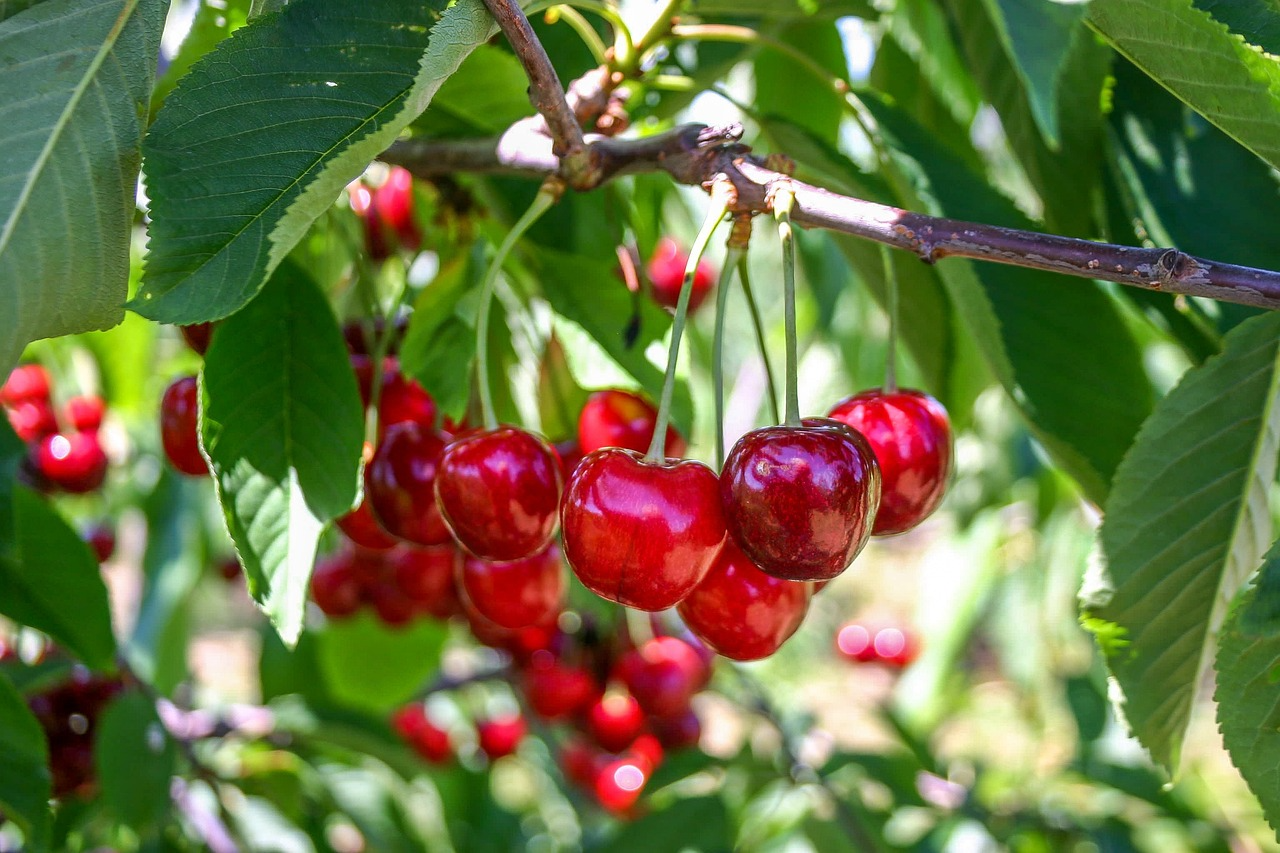
Last November, I cleared my calendar and finally started pulling together the pieces I planned for my book, which would be a memoir in essays exploring love, faith, and healing. Although I’d already written many of the pieces, I had never seen them all together in the same file. Doing so gave me the opportunity to look at them as a unit, edit and tighten, as well as plan new bridge essays to cover any holes. I also created a framework that tied together the chronological arc of the narrative—my seven years of growing cherries. Before November ended, I even had time to begin drafting a few of the new pieces. Along the way I logged onto NaNoWriMo regularly, joined a regional group, and began checking in, and lo and behold, the word count on my dashboard started to tick up and up and up! It was a true NaNo-palooza!

At the end of the month, the momentum continued. Over the next year, I concentrated on finalizing my new essays and wrote even more, ending up with a total of 22. Later, I turned back to my behemoth of a manuscript, and that’s when I re-discovered my draft framing document. This turned into the four thematic sections of “Plant,” “Believe,” “Pollinate,” and “Love,” and presto, I suddenly had a table of contents and my essays became actual chapters. Thanks to NaNoWriMo, I now have a 200-page manuscript that I’m currently circulating among my writing partners and will be submitting for publication.

Are you a diehard NaNoficionado? Or like me, are you on the fence? Either way, the tips in this column are meant to help you take advantage of NaNoWriMo and meet your own writing goals.

Think big. As mentioned before, you don’t have to use this time to write a novel, but you sure can. This is perfect for writers like me who have a short story that yearns to be a novella or longer. Maybe you have a juicy flash fiction that’s just itching to be part of a collection. Or a poetry chapbook. Perhaps you have an essay collection, or a memoir, or like me, maybe both. Whatever you’re working on, take it to the limit, and imagine what you might do with 50K words. As for me, it wasn’t the writing itself that intimidated me. I suffered from the age-old commitment phobia. But once I gave myself permission to think BIG and actually envision my work as a book, the writing itself was easy.

Go a little wild. Consider your NaNoWriMo experience as your personal sandbox. This is your chance to break personal boundaries and do something new. For example, you could try writing in second person or maybe in present tense. Or perhaps you could branch out and turn a nonfiction article into the background for a novel or short story. Or shift a poem into an essay, one of my favorite “makeovers.” In my case, I literally went a little wild. With the title, that is. Calling my book “Cherry Wild, a Memoir in Essays” sets the tone from the beginning, reinforcing the theme of my reconnection with nature.

Quash the critic. The critic inside my head was NOT invited to my NaNoWriMo. While she will come in handy as I finetune my synopsis and coalesce all the feedback, I promptly kicked her out the door during my brainstorming and writing sessions. During the month of November, make sure that your creative and imaginative writer self is firmly in charge, NOT the critical editor. Send her on a month-long cruise! See ya later, you naughty infiltrator!

Meet a new writer. While you can easily connect with friends who are also part of NaNoWriMo by sharing your usernames, you can also meet new writers. In the “My Community” tab, you will find both discussion forums and regional groups to join. NaNoWriMo also sponsors specialized virtual meet-ups for writers of similar backgrounds or interests. 

Check in. Not only did I enjoy entering my word count into my dashboard and watching it rise, I loved keeping tabs on the progress of my writer friends. Witnessing their successes inspired me to work that much harder, and vice versa. Under the “My NaNoWriMo” tab you’ll see links to “My Buddies.” Here is where you can easily see the word counts of your friends and compare theirs to your own.

Get support. This year NaNoWriMo offers more support than ever before, from yoga for writers to guidance on all genres, from fiction to memoir. The “Resource Hub” (under the “Writer’s Resources” tab) is your headquarters for support, including pep talks from celebrated writers and links to writing tips and exercises to keep your creative juices flowing. 

Celebrate! Once you begin reaching your writing goals, you’ll automatically rack up badges for important milestones, such as the 5K and 40K word marks. You can also award yourself a bevy of personal achievement badges for efforts such as planning, “pantsing,” and eureka moments. In addition, you may expect frequent kudos from your writing buddies, which will also keep you motivated every step of the way.

Ready to dive in? I hope so! My NaNo handle is “memwarrior” and I’d be honored to be your writing buddy. I hope to get some traction on a couple of new projects, including a creepy seaside novella. But if you’re still not sure, check out NaNo Prep, which offers a crash course in essential elements such as story development and time management.

For more inspiration, including craft articles, interviews and markets for submission, check out the complete WOW newsletter.

No matter where you are in your writing journey, I wish you all the best, and I hope you write your heart out this November. 

Make it a S-U-M-M-E-R to Remember!

This summer is a milestone for many reasons, but as you may have noticed, I officially changed my last name from “Memory” to “Harris!” I was thrilled to learn that my one-sentence flash essay “Pedal, Pedal, Pedal” won Off Topic Publishing‘s June 2023 contest on the theme of “Moving,” and I was so grateful for the opportunity to debut my new byline.

This piece wouldn’t have been possible if not for the support of Ang and Marilyn, my fellow “Memwarriors.” In fact, this piece was inspired by my love of Ang’s own masterful and riveting one-sentence essay, “Girls Like Us,” which appeared in Exposition Review. I’m linking it here so you can read it, too, and also fall in love with this unforgettable piece.

Why not try to write your own one-sentence flash? For more inspiration, I’m reprinting an excerpt from my column in the July 2023 Women on Writing newsletter, “Writer, Stop and Smell the Roses.”

As someone born in July, I’m a summer baby through and through. With so much inspiration around me, new ideas are springing up like clover. But it’s SUMMER! Gardening, swimming, dining on the deck, watching the baby birds…. What’s a writer to do?

As I thought about it, I realized the answer was right in front of me, in the form of an acrostic for the word S-U-M-M-E-R. If you’re like me, and you’re also suffering from a bad case of SWD (Seasonal Writer Distraction), I hope the pointers below will help you too.

S. Soak It In. As my puppy Tulsi reminds me, summer abounds in sensory pleasures—sights, scents, sounds, textures, and tastes. There’s the evening primrose with its velvety blooms, the myrrh fragrance of my roses, the eerie melody of the wood thrush, the sweet tang of my black raspberries, and more. Ahh! This is the time of year to let these sensations wash over you, and later, jot down those metaphors that will invariably come to mind. And don’t let those new ideas get too far away before acting on them.

U. Be U. Enjoying the summer is all about finding what works for “U.” While I should get back to my edits and revisions, I know that I must also reward myself along the way. After all, a dangling carrot is much more effective than a stick. For every hour spent on more difficult work, I’ve resolved to give myself the gift of 10 minutes to work on something new. And to satisfy my inner planner, I’ll set a mini goal or two for the summer, such as learning a new word or trying out a new style of sentence. But this is what works for me, and you are certain to find your own system. Whatever it takes, let “U” be “U” this summer.

M. Move. We writers know only too well how easy it is to park ourselves in front of a computer or notebook for hours. This is as bad for the mind as it is for the body. Think back to the frigid temperatures of January and how you longed for warmer weather and if you’re able, get moving. Take a walk around the yard in the morning. Breathe in the fresh air and revel in the scents of the season. Something as simple as lounging on the porch swing and feeling the sun on my face is all it takes to refresh my body and mind. Find a way to engage with the outside world and stretch your limbs, even for a few minutes. Your writing—and your health—will thank you for it.

M. Marvel. Awaken your inner child. Take some time every day to wonder about the world around you with fresh eyes. I like to imagine that the rustle I hear every morning as I walk by the bamboo grove comes from a family of fairies. Or that the dragonfly that just flew by shimmers with wings of stained glass. Whether it’s on your deck, in the woods, or at the park, spend some time marveling at nature. If you’re a poet, draft a new poem every day for a week. And if prose is your specialty, try to write a poem anyway, and use the language in your fiction or nonfiction.

E. Enjoy the Moment. Not only should you cherish the delights of summer, you should seize them too. As an example, I recently spent an entire morning laboring over the ending to a short story that just wasn’t working. Reluctantly, I took a break and heeded my husband’s call to witness one of our bee colonies swarm to their new home. Boy was I glad I did! This magical moment stirred my creative soul and generated a new metaphor that gave my conclusion that special little oomph. Don’t let your work keep you from experiencing the special moments of summer. They may never come again, and they may be just what you need.

R. Relax. The idea of summer is synonymous with napping in a hammock and paddling down a lazy river, but if you’re like me, you’re probably very busy trying to juggle it all—pets, gardening, family gatherings, and of course, writing. The extreme heat of summer can be exhausting, especially with more than twelve hours of sunshine, and it’s important that we take care of ourselves. Don’t feel guilty about taking a breather every now and then. Not only will it make you feel better, it just might improve your writing too!

If you like what you’re read so far, I hope you’ll check out the entire July WOW newsletter. It’s full of terrific writing advice and markets galore.

In the meantime, here’s wishing you a S-U-M-M-E-R to remember, full of endless joy and writing inspiration.

Happy Birthday Rita Coolidge!

When I’m drafting new pieces, I prefer to do so in silence, thus preventing any distractions from this fragile and mysterious art. However, once I’ve got a decent draft and worked out the kinks, I like to celebrate (!) and lightly edit while listening to music. And being a child of the 70s, I’m drawn to the mellifluous tunes of my generation, everything from Melissa Manchester to the Bee Gees and The Beach Boys. Recently, while working on a new short story, I delved into the soothing music of Rita Coolidge.

And to my surprise, I learned that May 1 is her birthday! This beautiful and talented singer-songwriter is 78 today. So please join me in celebrating my muse today. My favorite songs of hers include “We’re All Alone Now,” “I’d Rather Leave While I’m in Love,” and “All Time High.”

Do you have a musical muse? Do they vary according to your mood or the particular piece you’re writing? This is how it works for me. If you have a muse and you’d like to share, I’d love to hear about it. Who knows, you might just inspire me even more.

Editing is never as fun for me as writing. And in some cases, it can be as odious as folding fitted sheets or scrubbing out my waffle iron, so anything to help ease this work would be greatly appreciated.

Happy writing (and editing!)

Happy Poetry Month!

In celebration of April being National Poetry Month, I’m republishing a recent column I wrote for Women on Writing, my favorite community of fellow writers.

With cherry blossoms, warmer weather and longer days, April brings so many reasons to celebrate. For me, the season has brought yet another new dog into my life. Along with Max, a Siberian Husky, and Finn, a beagle-terrier mix, we now have Tulsa Rose (Tulsi for short), a twelve-week-old corgi. With three dogs on my hands, I’m especially grateful that April is also the official month of poetry. Between the endless barking, nipping, and wiggling, I need all the sanity I can get.

Tulsi loves nothing better than sinking her
little baby teeth into poetry!

In a previous WOW column, I wrote about why writers of all genres should consider writing poetry. This time we’re going to discuss why you should read poetry. As I write this, I realize I’m probably preaching to the choir. However, as I’m sure that the poets among us would agree, the pleasures—and value—of reading poetry cannot be overstated.

Six Reasons to Read Poetry

1. Sound. Reading poetry magically slows down the frenetic pace of life and forces us to concentrate on the very building blocks of writing—words. In truth, poetry is about more than words. It’s about syllables and sound. There’s a reason childhood rhymes such as Mother Goose’s “Hickory dickory dock, the mouse ran up the clock…” are so easy on the ears. As adults, we still appreciate rhyme. Who doesn’t relish every single syllable of Sylvia Plath’s famously manic villanelle: Mad Girl’s Love Song? But non-rhyming poetry has its own delights. Who can’t read Poem by William Carlos Williams and not imagine every single step of the cat walking over the jam closet and into the flower pot? Reading poetry is a great reminder of the importance of paying attention to every single syllable.

2. Capture a Moment. Most writers, whether they consider themselves traditional poets or not, possess a poet’s sensibilities. What I love so much about Williams’ poem is the way he preserved forever the elegant stride of his cat in an otherwise awkward situation. When I’m having difficulties on a scene in my own writing, I remind myself to break it down to a single moment, just as Williams did. For example, as my character frets about her new life after a divorce, if I want to convey despair, I will have her observe and reflect on the naked branches of her favorite maple tree in autumn. Conversely, if I want to express hope, I’ll have her ruminate about the nubile leaves of the same tree in spring.

3. Art of Compression. Reading poetry reminds us of the power of brevity. Yard Sale Chair by Robert Cooperman (Rattle #7) tumbles with delightful metaphors that easily transport the reader into a scene that is all-too-familiar but made fresh again. Reading it makes me work a little harder on my own word pictures. Matthew Sweeney’s Five Yellow Roses, another poem I recently discovered, reminds me that the world abounds with little stories. When stumped for new ideas, I simply stop and observe life around me, and as Sweeney did, re-imagine the possible story behind scenes such as a flower delivery.

4. Builds connections. Who doesn’t have the minute or two that it takes to read a poem? The efficiency and sheer accessibility of poetry crosses generations, economics, education levels and more. For example, you don’t have to be a Gen X’er like me to sway to the music at Adult Night at Skate World. (Rattle, February 11, 2023). This lovely poem by Christina Kallery so perfectly recreates the angst of lost love, old friendships and cheesy music of the roller rink that it resonates with readers of all ages. The writers among us can learn from her concise descriptions, clever enjambments, and that unforgettable last line.

5. Fosters empathy. Connections lead to the ultimate goal of any writing—to build understanding and compassion. I challenge you to read Flute in a Far Room by Ruth Moose (Your Daily Poem) without feeling your own twinge of loneliness along with our homesick narrator. And you don’t have to be a dog lover to be moved by the late Jane Kenyon’s After An Illness, Walking the Dog (Poetry Foundation). Reading Kenyon—who, like Moose, elevates the ordinary into the sublime—reminds us that the simplest acts in life are the universal ones.

Ta-da! And now, drum roll please, it’s time for the final reason that you should read poetry. But I’m sure you saw it coming.

6. Improves your writing. Reading poetry is not only fun, it inspires you to be a better writer. For all the reasons previously mentioned and then some. It provides a welcome break from our own work, thus enhancing mental health and happiness. In this sense, poetry is the ultimate “self-care” for writers.

I hope you’ve enjoyed some of the work I’ve shared in this post, and like Tulsi, will soon sink your teeth into your own favorites. As a starting place, take a look at The Ten Best Poems of All Time (compiled by Marie Seeba for The Strand). And if the month of April leads to you to write your own poems, even better.

Wishing you a glorious spring full of writing and inspiration!

Writing for the Season Makes It Even Merrier

Later this month, my interview with Sarah Elaine Hawkinson of Sasee magazine will appear in the always erudite and inspirational Women on Writing monthly newsletter. (And if you’re not already subscribing, I hope you’ll consider signing up today!) Among other subjects, we’ll discuss how Sasee publishes writing based on a particular theme, such as October’s “Renew & Revamp,” which I covered in my essay “A New Shade of Me.

Seeking to build your own writing portfolio? If so, consider writing for the season. Whether it’s Christmas, Valentine’s Day or Memorial Day, for example, the holiday provides that instant timely hook editors just love. This year, I wrote several pieces specifically geared to the season. “Modern Conveniences” (Pinestraw, December 2022) was a humorous piece based on a Thanksgiving dinner saved by the voice of my Grandma Wilma and “How to Host a Holiday Party with Style While Living with M.S.” (Healthline, November 28) was written specifically for Christmas.

I don’t always get something written in time, but because the days seem to pass by so quickly, I don’t sweat a passed deadline. In fact, now I try to plan ahead. For example, I’ve already thought of new ideas for Christmas of 2023, based on events of this year. A piece I pitched to an editor for Valentine’s Day didn’t quite make the cut, but she was kind enough to help me figure out a way to make it work for March. So never give up on those “evergreen” ideas, either.  

As I learned in classes taught by best-selling author Susan Shapiro, just keep writing. An editor who Zoomed into one meeting advised us to be prepared by keeping a treasure chest of pieces based on our own areas of expertise. Just wait, she said, your time will come. A special event, such as a new study or a new book, may very well spur the need for your work. In the meantime, it doesn’t hurt to set a Google Alert for words based on your favorite subjects.

Thinking ahead to the New Year, I hope these tips help you meet your writing goals for 2023. In the meantime, please have a Merry Christmas, try to stay warm, and enjoy the rest of the season.

Nothing Ever Happens Around Here

When I first moved from an urban area to the wilds of Randolph County, what I believed was the middle of nowhere, I admit to being a little concerned. Would I make new friends? What about my favorite chain restaurants, not to mention the malls? What about the silence? The scenery? What if the all the green fields just blended together into monotony? And most importantly, what would I write about? What if nothing ever happens around here?

Six years later, I can truly say that none of my worst fears came to pass. I’ve made plenty of friends, many of whom are farmers, and I’ve learned just what these fields can do. One of my friends even raises donkeys, and recently I held my first 5-day old donkey jack! I also keep in touch with cherished friends from far away as New York City through Zoom and other platforms.

Meet Baby Copper–just 5 days old and 25 pounds!

It is not quiet in the country. Oh no. The birdsong here is deafening, from the wood thrush to the pileated woodpecker soaring overhead with his eerie primeval cry. We’re close to the local airport, so there’s always a new whir circling overhead. A special thanks to Mom, who introduced us to the terrific flightradar24 app, so now we know that the Boeing overhead came from Atlanta and is on its way to Liege, Belgium! So much for being in the middle of nowhere. My pilot grandfather would definitely approve.

Meet Max, my new work-out routine!

Boredom remains the least of my worries. In fact, I was more bored in the city! We’ve had at least one fugitive in the woods, two rattlesnakes (this year alone), a stranded racoon, and just recently, a stray Siberian Husky pup came our way.

I don’t miss the malls at all, which is a good thing since the pandemic seriously altered the world of shopping. And nobody here cares about fashion anyway — it’s more about comfort! As for the fancy restaurants, I’d rather live three miles from from my beloved niece, who sends me a text such as “Hey, can I come over and make pumpkin cheesecake cookies with you?”

Cooking is just one of the things I’ve found to write about, and there’s been so many more, from sewing and building to gardening and butterflies. In fact, if there were any more going on around here, I wouldn’t have time to sleep!

For the next few months, I’ll be concentrating on my memoir, a project that I hope will blend together many of my experiences through the years. So for this reason, I hope it slows down here just a little bit.

Of Lightning and Lightning Bugs

English speakers are so fortunate to claim a language with more words than any other—nearly 200,000—but writers, does it ever feel as if you just can’t find that perfect word? For us, this has to be the ultimate existential crisis. As Mark Twain so aptly said: “The difference between the almost right word and the right word is really a large matter—it’s the difference between the lightning bug and the lightning.”

I’m forever seeking that elusive flash of light, but not just for the purposes of scintillating conversation. I primarily aim to bolster my battery of expression while writing. For example, although “cajole” or “coerce” will do just fine, isn’t a fresh verb such as “dragoon” much more fun?

Of course I love those word quiz books that promise to make us smarter. And I keep Roget’s Thesaurus nearby at all times. I’m also a huge fan of daily emails from Dictionary.com or Merriam-Webster, although they sometimes offer up tongue-twisters such as “phantasmagoric” (having a fantastic or deceptive appearance) that I’m not likely to ever use, except perhaps in a poem. Now there’s an idea!

What works best for me is to discover a new word conveniently within its own context, such as in a book by a favorite author. Works by newspaper columnists are particularly illuminating. Thanks to Tina Brown, a Cambridge educated editor and writer of books such as The Vanity Fair Diaries and The Palace Papers, words such as “farrago” and “miasma” float up regularly in my word soup. A new set of authors—Jonathan Allen and Amie Parnes—has recently led me to discoveries such as “imbroglio,” “mien,” and “shambolic.” I make note of these words and their meanings and keep them handy as I write.

But there’s no inspiration like classic authors. After re-reading a little Henry James, I found myself surrounded by even more choices and unusual pairings. In Portrait of a Lady, James describes Isabel Archer’s ill-fated choice of Gilbert Osmond as a husband in this way: “She tasted of the sweets of this preference, and they made her conscious, almost with awe, of the invidious and remorseless tide of the charmed and possessed condition, great as was the traditional honor and imputed virtue of being in love.”

Invidious! Now this is a new word for me, and it means “likely to arouse or incur anger or resentment in others.” Having both a cat and a dog who can’t help annoying each other gives me plenty of opportunities to practice using both “invidious” and “remorseless.”

I would be remiss without including an example from Vladimir Nabokov, that famous polyglot and one of my most favorite writers. He not only drew from an enviable vocabulary spanning several languages, he was a master of description and metaphor. He opens his short story “Spring in Fialta” with some of the most beautiful prose ever written. (Read it online here). Later, in the same story, when describing an orchestra, Nabokov wrote: “First I noted the ostrich thigh of a harp….” I confess that I will drool over this delicious metaphor all day long.

I hope you’re inspired to assemble your own lexicon of new words. After all, we can’t wait around for lightning to strike. All good word warriors must be prepared to dazzle.

For more writing inspiration, check out my recent Women on Writing interview with my friend and mentor, the inimitable Ruth Moose.

What I’ve Learned About Writing from Watching Beat Bobby Flay!

My friends know that I love cooking almost as much as writing. I cook when I’m happy, I cook when I’m sad, and I even cook when I’m mad. Naturally, I also write about cooking.

I am also a huge fan of the Food Network show: Beat Bobby Flay! Lately I’ve been musing a little bit on what this show means to me as a writer. And as strange as it sounds, there are actually many lessons we writers can take from this popular cooking competition show, especially from the celebrated chef himself.

Never bore your readers….or the judges. Just as Bobby surprises the judges with little flourishes such as adding pickled shallots, fried okra, or a crispy bottom layer to his rice, we should also delight our readers (and judges) with fresh diction and unusual revelations, about our fictional characters or about ourselves when writing essays.

It’s all about the presentation. One of the many things I adore about Bobby is how he always, always, always, no matter how stressed he may be, thinks about the presentation of his dish to the judges. Somehow he manages to find time to sprinkle a few chopped chives or parsley on top or drip a curly-cue of sauce on the side, and give each plate that Michelin-star appearance. Similarly, we need to be thinking about the presentation of our work. No sloppiness, no typos. Our writing deserves a careful proofread every time, and of course, a snazzy title.

Never let ‘em see you sweat. Bobby is unflappable. No matter how many curve balls are thrown his way – such as the time someone tied an arm behind his back or outlawed peppers – Bobby forges ahead and finishes, even when he’s forced to bake, which he admits is not his strong suit. This ability stems from just one thing—his unending love of cooking. The same goes for writers. If you are not absolutely loving what you’re doing, even in the toughest of times, this may not be the field for you. Loving our work is what makes us want to follow through and enjoy the ride, in the same way as Bobby.

Don’t take yourself too seriously. The celebrity judges have so much fun with Bobby, whether forcing him to play the kazoo, singing in his ear, or just plain trash-talking him, they really try to push his buttons. But he never caves to the pressure. Instead, he just plays along with their antics and laughs, even as he fights to the finish. In his example, we writers shouldn’t pass up the opportunity to chuckle, whether it’s by adding a touch of humor to a poem or by poking fun at ourselves in an essay. This element comes naturally to me because I’m always doing something goofy.

Be humble. Bobby’s humility is what I admire most about him. In his own words, he is not afraid to fail. This means that the three-time James Beard Award winner and repeated Iron Chef, can afford to greet his competitors with respect. “I’m worried,” he’ll admit, when he faces a chef with a reputation for excellence, and I think he means it. And when another chef does beat him, he shakes their hand (or hugs them) and walks off the stage like a true champion, giving the winner their own moment to shine. The power of expression comes with tremendous responsibility, and as writers, we should always remember to be grateful and kind.

What about you? Do you have an idol outside the writing world that you admire? Think about it, and you might find new ways of inspiration.