Library of Congress!

At the risk of overusing the exclamation point–with a nod to my grammarian friend Melissa–I couldn’t help but share some exciting, albeit nerdy news. While the book won’t be out until November, Naked and Hungry has a Library of Congress number! And a description! Check it out:

Library of Congress Cataloging-in-Publication Data Memory, Ashley. Naked and hungry : a novel / by Ashley Memory. p. cm. ISBN 978-1-932158-93-9 (trade pbk. : alk. paper) 1. Self-actualization (Psychology)–Fiction. 2. Environmental protection–Fiction. I. Title. PS3613.E477N35 2011 813′.6–dc22 2011000847

It also comes with an ISBN number, which is short for International Standard Book Number. My editor informs me that an ISBN number is one that the publisher actually purchases in advance but I was still pretty excited about that because it’s also a bit of a milestone. This is the number that sometimes appears on top of the barcode on the back of the book.

Foresighted Melissa estimated that the “PS” portion of the LOC number would probably put my book on the 8th floor of UNC’s Davis library, just one floor above dear Joyce Cary and all the other British novelists who helped inspire me along the way.

Although the editor had categorized the book as “humor,” note that its primary category is self-actualization. H.T. would certainly find humor in that. While others poked fun at his moving to a one-room cabin in the woods, he would probably argue that he reached self-actualization and more.

Speaking of which, the nerdiest girl in the world better get back to the grindstone. Happy Sunday!

Goals, Set, Match!

Happy New Year! With all the talk of goals and resolutions in the air, I’ve decided to blog about this timely topic on the very first day of 2011. This may help me stay focused and perhaps offer a little inspiration to you.

One of the things I’ve learned from my professional career is the importance of setting tangible goals. They’re more measurable, and in the end, much more do-able.

Instead of deciding: “This year I will be more innovative at work,” try being more specific: “This year I will add a new outreach strategy to my communications plan.” Or, instead of saying: “I will be more compassionate this year,” you might say: “I will volunteer 16 hours at a center that supports my favorite charities.”

What does this mean for writers? You may have already guessed. Instead of saying: “I will write a book this year,” consider refining that to say: “I will write one chapter of a novel per week.” Most successful writers are even more specific. They say: “I will write 3,000 words per day.” This can be a blog entry, this can be a short story, essay, or even the synopsis of a novel, but it will never go to waste. And 3,000 words per day translates into a staggering 1,095,000 words per year or almost 14 novels!

Is this a realistic goal for most of us? No, probably not, but you get the picture. For me, I’d be perfectly happy to produce 5,000 words per week, or about 714 per day, for my current project, the sequel to Naked and Hungry. Along the way, I also plan to submit two new short stories to contests, and develop at least one new crepe recipe per month. If I end up exceeding my goals in any of these pursuits, even better, but setting realistic goals is the most important step.

So, think about your goals very carefully, don’t forget to set them, and then the fun part: match!


The Turning Point

I’ve blogged before about the key elements of a novel.  Tonight I’d like to touch on the short story. For its brevity and eloquence, it’s one of my favorite forms, both to read and to write. Some of the world’s best-known novelists continue to experiment with this short form and for good reason. She’s a tough and relentless mistress, but once a writer succeeds with one, he feels as if the curtain separating us from the divine has parted just for a moment. That all-too brief glimpse is a wonderful and terrible moment because once you have experienced it you are forever trying to capture it again. The rewards for the reader run in parallel. The curtain parts and for the briefest of moments we are in sympathy with each other.

What makes a great short story? As much as I enjoy them, I’m not entirely sure. I’ve studied enough of the classics to know, however, that these masterpieces share something. They all have a major turning point for the principal character. The point at which this character realizes that their world will never been the same. Novels may have multiple turning points but short stories only have room for one. The author, and Flannery O’Connor is the best at this, may hint at the turning point, but it is up to the reader to figure out just when it actually happens.

In a “A Good Man is Hard to Find,” we know that the grandmother is malicious and scheming. We know that she has misled her family into veering off the main highway and causes them to fall into the hands of the notorious criminal, the Misfit. The turning point for the grandmother is the point when she lays eyes upon the Misfit. “His face was as familiar to her as if she had known him all her life but she could not recall who he was.” And while later in the story, she will ask the Misfit to pray, she will touch him, call him one of her “babies,” and ultimately be shot by him, for me this first moment of recognition is what sets the wheels in motion for the grandmother.

Another example is F. Scott Fitzgerald’s “The Ice Palace.” In it, this master of the short story also foreshadows the end of Southern belle Sally Carrol’s engagement to northerner Harry Bellamy. The moment that it ends for Sally Carrol, however, is the moment she finds herself lost in a palace built of ice. “It was an icy breath of death; it was rolling down low across the land to clutch at her.” At that point, you know, you just know that she will not marry Harry and that she will happily return to the Southern “boys” that were beneath her before. And when she does, for the reader, there is that delicious little tickle in the pit of your stomach that tells you that you were right!

One story that I will also love forever is Chekhov’s “The Lady with the Little Dog.” And not just because I have a little white spitz, and not just because of the main character’s ironic observations about the people around him, but because of the way Gurov describes the moment he knows that this love affair will be different. “Anna Sergeevna looked at the ship and the passengers through her lorgnette, as if searching for acquaintances, and when she turned to Gurov, her eyes shone.” I’m sure this is even more beautiful in Russian, but for me it’s indelibly lyrical in English.  If you have never read this story, you simply must. The ending paragraph is one of the most exquisite of all short stories, even rivaling O’Connor’s fabled (and very different) ending of “A Good Man.”

There are many other key parts of a good story: unforgettable characters, pivotal scenes, and a strong sense of place, but what brings them all together for me is that turning point. I’ve been told several times by good writers that “there’s no money in short stories.” Perhaps that’s true, but the rewards of writing them are endless and lead to the kind of skills that will help you write longer works. So, if you’re like me, who’s working my way through two short stories (not to mention the sequel to my novel), take some time to read over your favorite short stories and identify that crucial turning point. But beware. It’s the moment where your world may also change forever.
What Are You Thankful For?

With just two days before Thanksgiving,  I am reminded of a Reader’s Digest article I read long ago. The author stressed the importance of making an effort to express gratitude for even the smallest of gifts on a daily basis. It might mean, for example, thanking your husband for his support after a stressful day, thanking your son for his ability to make you laugh, or thanking God for the camellias that manage to bloom in winter. It might take a bit of soul-searching to do this, but even on the worst of days, it’s not so hard to find something to be grateful about.

Yes, I have to go to work but my car has gas in it.
Three of the four buttons on my blazer are still attached.
The dog has piddled on the floor but at least I didn’t step in it!

As I reflect on these blessings, I can’t help thinking about H.T., the main character in Naked and Hungry. After the difficult circumstances he faces, his thank-you list might read a little like this:

Although my dog has been impounded, at least he is still alive.
With a net worth of -$543, I don’t have to worry about anyone envying me.
Although I woke up in jail, at least I woke up.

H.T. is fortunate in many ways, however. His life has sunk so low that there’s nowhere else to fall. It’s why he has no choice but to face things with courage and a healthy dose of humor. This helps him appreciate the little things like Krispy Kreme doughnuts and his copper-bottomed saute pan.

Not surprisingly, as the author of the Digest article pointed out, there is a correlation between gratitude and a higher life satisfaction and stronger relationships in your life.

So we’ll end where we began. Yes, among many other things to do tomorrow, I’ve got to brine a turkey but thank heavens I’ve got a turkey.

Happy Thanksgiving!

Notes from Charlotte

Just returned from a great meeting of the N.C. Writers’ Network in Charlotte, where I had the honor of speaking with and hearing from numerous other writers. As the slogan for the NCWN goes, writing is a solitary art but all writers need a community. This saying has never been truer. Whether you’re writing mystery, suspense, nonfiction or poetry, all writers benefit from the chance to share triumphs and challenges. This weekend, I not only met talented writers, but more importantly, I met wonderful people. As a result, I have returned inspired and excited about my own journey.

A special thanks to Sarah Beth for assisting with my presentation; she knows that I could not have done this without her. She tackled her role with enthusiasm and encouragement and I will always be grateful.

As promised, to the patient attendees of my workshop, here is a copy of my presentation, From Writer to Entrepreneur: How Building a Theme-Based Website Can Take You There. And if, as you embark on your own website journey, I can help any of you in any way, I hope you won’t hesitate to call on me.

And the votes are in….

If you were tuning in for some pithy insights about state or national politics, sorry! I’m talking about the results of our very own poll on the importance of book covers. Guess what? All of you who voted agreed that the cover of a book is important in your decision of whether or not to read or buy a book. While only 14% report that a book cover is “very important,” most of you gave ratings between “important and somewhat important” which tells me that yes, indeed, we do tend to judge a book by the cover.

I hope I see you this weekend in Charlotte at the N.C. Writers’ Network Conference! Along with the help of my dear friend Sarah Beth Robbins, I’ll be leading a workshop on website development. We both look forward to connecting with other writers and learning from them. We also hope to visit with another longtime friend, Twing, who lives just a few blocks away from our hotel. Immediately following the conference, please check back to this blog for a pdf version of our presentation, From Writer to Entrepreneur, which I promise to post here. I also  hope to have a digital image of the final cover of Naked and Hungry very soon, which I can’t wait to share.

Until then, stay well and keep writing!


Do you judge a book by the cover?

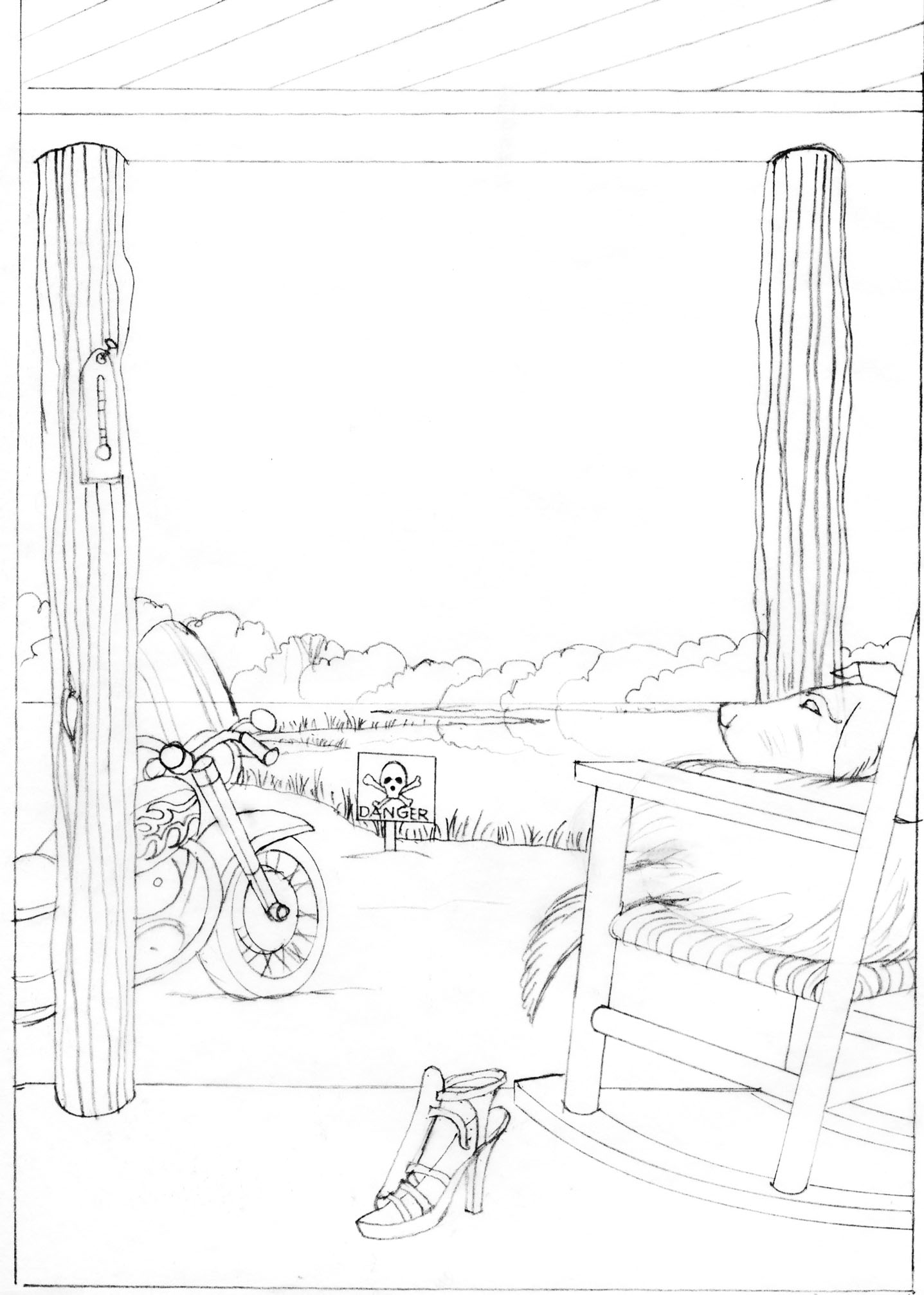
Sketch for the cover of Naked and Hungry
Naked and Hungry cover sketch

After several sketches and much discussion with the artist and publisher, today my editor (Judy Geary) and I selected the final concept sketch for the cover of Naked and Hungry. Thanks to Melissa and Sarah Beth for their helpful insights; there will be some minor adjustments before it’s all said and done but I thought you’d like to see where this is going. The next step will be for the artist to create an actual painting based on the sketch you see here. I’m assuming the title will go in the blank space that’s currently the sky. I hope you like it as much as we did; here’s hoping the final piece lives up to this sketch!

When you’re deciding whether or not to buy a book, do you consider the cover? These days I primarily buy books from familiar authors, so the cover is less important. However, when I was at the National Book Festival, I overhead one attendee say to another: “I know you’re not supposed to judge a book by the cover, but I always gravitate toward books with a compelling cover.”

What about you? Think about it and let me know!


From Arlington to the National Book Festival

Just returned last night from a weekend trip to D.C., where we honored Robert (Bob) Behrenshausen, my husband’s stepfather and a true WWII hero. He enlisted in the U.S. Navy at just 16 years of age, survived two shipwrecks and participated in nearly all major battles in the South Pacific, including the Battle of Midway. Although he fought with his trademark bravery, Bob lost his battle with cancer in July, and on Friday, Sarah, his beloved wife, interred his ashes in the Columbarium in Arlington. We were privileged to be part of this ceremony, which included a service in the Ft. Myers Chapel and a 21-gun salute on the revered Arlington lawns. Fittingly, we crossed paths with another WWII hero, Vernon Baker, an African-African veteran who was awarded the Medal of Honor for his heroism and who was also interred in Arlington that day.

It was a short and brutally hot weekend but full of activity. As my husband enjoyed a private tour of the National Air and Space Museum on Saturday, I camped out under the “Fiction and Mystery” tent at the National Book Festival on the Mall where famous authors such as Isabel Allende, Diana Gabaldon, and Elizabeth Kostova held court. They spoke at length about their work and spent an equal share of time offering advice to writers. The latter two were asked how they found time to write. The answers amazed us all. Both Diana and Elizabeth were mothers to three (that’s three each!) children under the age of 10 when they began their masterpieces. Elizabeth also worked full-time as a university professor and free-lance writer and spent ten meticulous years researching The Historian, which I look forward to reading.Her painstaking attention to detail and love for Victorian authors is reminiscent of A.S. Byatt, whose novel Possession was a favorite of mine.

I missed historian and biographer Stacy Schiff, who spoke after we left. She is the author of Vera, a biography of the wife of Vladimir Nabokov, one of my all-time favorite writers. I loved Lolita, of course, but my model for short stories has always been my dog-eared (quite literally because it bears the teeth marks of my puppy at the time) copy of Spring in Fialta.  How a man whose first language is Russian could pen such a lyrical and evocative short story in English has always amazed me. In Vera, which I eagerly devoured some years ago, Schiff paints an interesting portrait of the woman who stood beside Nabokov and may have helped him a little more than we knew in his Harvard lectures. Anyway, that’s another story, but the reason I bring up Schiff is to say that I learned at the Book Festival that she has also written a biography of another complex man, Antoine St. Exupery. Ever since reading The Little Prince, I’ve been fascinated with the French aviator-philosopher known simply as Tonio to his family. You might remember that St. Exupery’s plane mysteriously disappeared during WWI and was recently discovered in the Mediterranean. I look forward to folding over the pages of this rich biography for clues and perhaps an answer to the mystery…..

What mysteries will you seek to solve this weekend? Whatever they may be, happy hunting!

The Three Acts of a Novel

Some of you are writers yourselves and have been curious about my journey as a writer. Naked and Hungry, my first completed novel, was preceded by years of reading and dissecting short stories. This work paid off in the end because I later learned to write them. And I still love writing short stories. They can be drafted in the space of a weekend, edited by the next and finished within two weeks. Some writers can do it faster, of course, but this is my way. First piece of advice: Read short stories!

Short stories are mini-novels. Just like a novel, they are structured in three acts: the setup, the development and the climax, followed by a brief “denouement” which isn’t really an act but a scene where all the loose endings are resolved.

Now, the differences. Unless you’re incredibly prolific like successful commercial writers, novels take much longer to produce. They require enormous amounts of patience and the willingness to put the work aside without resolving all of your loose ends. Argh! This is very difficult for me, because I like to shut down my computer knowing that every writing goal has been crossed off the list. Sorry, Type A’ers (and this is my tendency.) Novel writing belongs in the Type B world! It’s a journey that’s as full of obstacles as rewards, and you must teach yourself to love the difficult times as much as those times when the words simply seem to flow on their own.

Now firmly into my second book, a sequel to Naked and Hungry that is tentatively titled Born Again, Dead Again, I am experiencing this pleasurable turmoil all over again. Although I wrote the synopsis over a year ago, I’m finding myself pulled in slightly different directions. And I’m reminding myself that it’s okay to do this, to let recent events inform my writing and to let the story flow naturally. While adhering, of course, to the three-act structure. Argh! There is the paradox!

Although I could ramble all day, I’d rather leave you with a Final Piece of Advice: Read Write A Book in A Month by Victoria Schmidt. This book not only explains the 3-act process better than any other (literally laying bare the winning formula of books like Bram Stoker’s classic Dracula) but also gives practical and inspirational advice throughout. Although it took me much longer than one month to write Naked and Hungry, my pace definitely increased once I stumbled upon Schmidt’s book. And had I read it first, oh, the time I could have saved.

Technical points aside, the Type A’ers among you will love this quote from the book, which is attributed to Peter F. Drucker: “What you have to do and the way you have to do it are incredibly simple. Whether you are willing to do it is another matter.”

Enjoy writing? Let’s go to the North Carolina Writers’ Network Conference!

Enjoy writing? Then you should plan to attend the annual conference of the North Carolina Writers’ Network in Charlotte from November 5-7. Learn from the masters such as the state Poet Laureate Cathy Smith Bowers and Robert Inman, journalist turned screenwriter. You can also network with other writers and peruse the state’s latest literary offerings. And….if you’re interested in learning how to develop a website, plan to attend a very special session titled “From Writer to Entrepreneur: How Building a Theme-Based Web Site Can Take You There” by yours truly!

Here is a description:

Tired of waiting weeks or months for responses to your query letters? Fill up the time by creating your own website for fun…and for profit. No matter what your passion—whether pets, travel, cooking, gardening, you name it!—Ashley T. Memory will teach you how to create a high-traffic and profitable website with little to no knowledge of technology. In this informative and fun workshop, you’ll learn how to select a site concept, create high-value content pages, and build the kind of relationship with your visitors that will turn your website into a successful online business.

For more, check out the entire Conference Brochure. Hope to see you there!