Let’s Start a Nano-Palooza!

This month I was honored to pen the introduction to the November newsletter for Women on Writing, the prestigious and inspirational writing community. I’m reprinting it here, in the hopes that my fellow writing friends will take advantage of National Novel Writing Month (or NaNoWriMo).

I was a skeptic. To put it mildly. In other words, I was the ultimate NaNoNayer (NaNo-Naysayer ☹). The idea had always seemed a little silly to me. Why write my heart out in November when technically I could do that all year long? And what’s with all the badges, tools, and community building? As an adult, I should be able to manage myself without all the hoopla, right? Besides, I wasn’t working on a novel anyway.

The truth is that I didn’t write my heart out all year long. And I couldn’t manage myself. In fact, among freelancing, taking care of three dogs, tending a garden, volunteering at church, and the normal kerfuffle of life, it was all I could do to set aside a few hours a week to finish a single essay. I needed a little push. In fact, I had been talking so long about finishing my memoir that the eyes of my writer friends glazed over every time I brought it up. So, when I found out that NaNoWriMo isn’t just for novelists, I decided to give it a try.

All writers, whether novelists, poets, playwrights, screenwriters, essayists and memoirists, are welcome at NaNoWriMo. In fact, anyone aiming to write 50,000 words toward any project will find something of value at NaNoWriMo, from motivation and accountability to making new friends and gaining new skills.

Last November, I cleared my calendar and finally started pulling together the pieces I planned for my book, which would be a memoir in essays exploring love, faith, and healing. Although I’d already written many of the pieces, I had never seen them all together in the same file. Doing so gave me the opportunity to look at them as a unit, edit and tighten, as well as plan new bridge essays to cover any holes. I also created a framework that tied together the chronological arc of the narrative—my seven years of growing cherries. Before November ended, I even had time to begin drafting a few of the new pieces. Along the way I logged onto NaNoWriMo regularly, joined a regional group, and began checking in, and lo and behold, the word count on my dashboard started to tick up and up and up! It was a true NaNo-palooza!

At the end of the month, the momentum continued. Over the next year, I concentrated on finalizing my new essays and wrote even more, ending up with a total of 22. Later, I turned back to my behemoth of a manuscript, and that’s when I re-discovered my draft framing document. This turned into the four thematic sections of “Plant,” “Believe,” “Pollinate,” and “Love,” and presto, I suddenly had a table of contents and my essays became actual chapters. Thanks to NaNoWriMo, I now have a 200-page manuscript that I’m currently circulating among my writing partners and will be submitting for publication.

Are you a diehard NaNoficionado? Or like me, are you on the fence? Either way, the tips in this column are meant to help you take advantage of NaNoWriMo and meet your own writing goals.

Think big. As mentioned before, you don’t have to use this time to write a novel, but you sure can. This is perfect for writers like me who have a short story that yearns to be a novella or longer. Maybe you have a juicy flash fiction that’s just itching to be part of a collection. Or a poetry chapbook. Perhaps you have an essay collection, or a memoir, or like me, maybe both. Whatever you’re working on, take it to the limit, and imagine what you might do with 50K words. As for me, it wasn’t the writing itself that intimidated me. I suffered from the age-old commitment phobia. But once I gave myself permission to think BIG and actually envision my work as a book, the writing itself was easy.

Go a little wild. Consider your NaNoWriMo experience as your personal sandbox. This is your chance to break personal boundaries and do something new. For example, you could try writing in second person or maybe in present tense. Or perhaps you could branch out and turn a nonfiction article into the background for a novel or short story. Or shift a poem into an essay, one of my favorite “makeovers.” In my case, I literally went a little wild. With the title, that is. Calling my book “Cherry Wild, a Memoir in Essays” sets the tone from the beginning, reinforcing the theme of my reconnection with nature.

Quash the critic. The critic inside my head was NOT invited to my NaNoWriMo. While she will come in handy as I finetune my synopsis and coalesce all the feedback, I promptly kicked her out the door during my brainstorming and writing sessions. During the month of November, make sure that your creative and imaginative writer self is firmly in charge, NOT the critical editor. Send her on a month-long cruise! See ya later, you naughty infiltrator!

Meet a new writer. While you can easily connect with friends who are also part of NaNoWriMo by sharing your usernames, you can also meet new writers. In the “My Community” tab, you will find both discussion forums and regional groups to join. NaNoWriMo also sponsors specialized virtual meet-ups for writers of similar backgrounds or interests. 

Check in. Not only did I enjoy entering my word count into my dashboard and watching it rise, I loved keeping tabs on the progress of my writer friends. Witnessing their successes inspired me to work that much harder, and vice versa. Under the “My NaNoWriMo” tab you’ll see links to “My Buddies.” Here is where you can easily see the word counts of your friends and compare theirs to your own.

Get support. This year NaNoWriMo offers more support than ever before, from yoga for writers to guidance on all genres, from fiction to memoir. The “Resource Hub” (under the “Writer’s Resources” tab) is your headquarters for support, including pep talks from celebrated writers and links to writing tips and exercises to keep your creative juices flowing. 

Celebrate! Once you begin reaching your writing goals, you’ll automatically rack up badges for important milestones, such as the 5K and 40K word marks. You can also award yourself a bevy of personal achievement badges for efforts such as planning, “pantsing,” and eureka moments. In addition, you may expect frequent kudos from your writing buddies, which will also keep you motivated every step of the way.

Ready to dive in? I hope so! My NaNo handle is “memwarrior” and I’d be honored to be your writing buddy. I hope to get some traction on a couple of new projects, including a creepy seaside novella. But if you’re still not sure, check out NaNo Prep, which offers a crash course in essential elements such as story development and time management.

For more inspiration, including craft articles, interviews and markets for submission, check out the complete WOW newsletter.

No matter where you are in your writing journey, I wish you all the best, and I hope you write your heart out this November. 

Tips on Publishing Short Pieces

Writers! Let’s finish 2023 on a strong note. Join me and Charlotte Lit on Tuesday, November 7, from 6 – 8 p.m. for a Zoom class on where and how to publish your short pieces. We’ll survey the most exciting open calls and contests seeking your work now, whether poetry, fiction, nonfiction or hybrid.

Hope to see you there!

Happy Poetry Month!

In celebration of April being National Poetry Month, I’m republishing a recent column I wrote for Women on Writing, my favorite community of fellow writers.

With cherry blossoms, warmer weather and longer days, April brings so many reasons to celebrate. For me, the season has brought yet another new dog into my life. Along with Max, a Siberian Husky, and Finn, a beagle-terrier mix, we now have Tulsa Rose (Tulsi for short), a twelve-week-old corgi. With three dogs on my hands, I’m especially grateful that April is also the official month of poetry. Between the endless barking, nipping, and wiggling, I need all the sanity I can get.

Tulsi loves nothing better than sinking her
little baby teeth into poetry!

In a previous WOW column, I wrote about why writers of all genres should consider writing poetry. This time we’re going to discuss why you should read poetry. As I write this, I realize I’m probably preaching to the choir. However, as I’m sure that the poets among us would agree, the pleasures—and value—of reading poetry cannot be overstated.

Six Reasons to Read Poetry

1. Sound. Reading poetry magically slows down the frenetic pace of life and forces us to concentrate on the very building blocks of writing—words. In truth, poetry is about more than words. It’s about syllables and sound. There’s a reason childhood rhymes such as Mother Goose’s “Hickory dickory dock, the mouse ran up the clock…” are so easy on the ears. As adults, we still appreciate rhyme. Who doesn’t relish every single syllable of Sylvia Plath’s famously manic villanelle: Mad Girl’s Love Song? But non-rhyming poetry has its own delights. Who can’t read Poem by William Carlos Williams and not imagine every single step of the cat walking over the jam closet and into the flower pot? Reading poetry is a great reminder of the importance of paying attention to every single syllable.

2. Capture a Moment. Most writers, whether they consider themselves traditional poets or not, possess a poet’s sensibilities. What I love so much about Williams’ poem is the way he preserved forever the elegant stride of his cat in an otherwise awkward situation. When I’m having difficulties on a scene in my own writing, I remind myself to break it down to a single moment, just as Williams did. For example, as my character frets about her new life after a divorce, if I want to convey despair, I will have her observe and reflect on the naked branches of her favorite maple tree in autumn. Conversely, if I want to express hope, I’ll have her ruminate about the nubile leaves of the same tree in spring.

3. Art of Compression. Reading poetry reminds us of the power of brevity. Yard Sale Chair by Robert Cooperman (Rattle #7) tumbles with delightful metaphors that easily transport the reader into a scene that is all-too-familiar but made fresh again. Reading it makes me work a little harder on my own word pictures. Matthew Sweeney’s Five Yellow Roses, another poem I recently discovered, reminds me that the world abounds with little stories. When stumped for new ideas, I simply stop and observe life around me, and as Sweeney did, re-imagine the possible story behind scenes such as a flower delivery.

4. Builds connections. Who doesn’t have the minute or two that it takes to read a poem? The efficiency and sheer accessibility of poetry crosses generations, economics, education levels and more. For example, you don’t have to be a Gen X’er like me to sway to the music at Adult Night at Skate World. (Rattle, February 11, 2023). This lovely poem by Christina Kallery so perfectly recreates the angst of lost love, old friendships and cheesy music of the roller rink that it resonates with readers of all ages. The writers among us can learn from her concise descriptions, clever enjambments, and that unforgettable last line.

5. Fosters empathy. Connections lead to the ultimate goal of any writing—to build understanding and compassion. I challenge you to read Flute in a Far Room by Ruth Moose (Your Daily Poem) without feeling your own twinge of loneliness along with our homesick narrator. And you don’t have to be a dog lover to be moved by the late Jane Kenyon’s After An Illness, Walking the Dog (Poetry Foundation). Reading Kenyon—who, like Moose, elevates the ordinary into the sublime—reminds us that the simplest acts in life are the universal ones.

Ta-da! And now, drum roll please, it’s time for the final reason that you should read poetry. But I’m sure you saw it coming.

6. Improves your writing. Reading poetry is not only fun, it inspires you to be a better writer. For all the reasons previously mentioned and then some. It provides a welcome break from our own work, thus enhancing mental health and happiness. In this sense, poetry is the ultimate “self-care” for writers.

I hope you’ve enjoyed some of the work I’ve shared in this post, and like Tulsi, will soon sink your teeth into your own favorites. As a starting place, take a look at The Ten Best Poems of All Time (compiled by Marie Seeba for The Strand). And if the month of April leads to you to write your own poems, even better.

Wishing you a glorious spring full of writing and inspiration!

Of Momentum and Hope

It would be so easy to say that the life of a writer is made up of many ups and downs. Such as finishing a challenging piece of writing, seeing it rejected, possibly many times, before—if we’re lucky—having it accepted or winning a prize. But the truth is there are so many other little things in between.

Suppose, in the case of a good writing friend, you meet a huge deadline you set for yourself. Or maybe a famous writer that you just followed on Twitter follows you back! And then there’s the moment you finally settle on the perfect word for what you’re trying to say. “For your born writer,” says Catherine Drinker Bowen, “nothing is so healing as the realization that he has come upon the right word.”

Small victories are important but so are the small roadblocks. Suppose you can’t find a book that you just know is in your library, but you stumble on another one you know you need to read. Then there’s having an essay you worked on for months get rejected. It’s crushing at first, but if it compels you to work a little harder on a troublesome paragraph, that decline can turn into a boon.

All of these little steps –good, bad, or serendipitous—are part of the same thing: momentum. And this is the life force of a writer. Momentum is also the energy of being alive. It starts with the decision to get out of bed in the morning. To keep that date with your writing desk. To go on a walk with your husband to see the blooms on the quince tree. And then finding a bird’s nest lodged in the branches.

Momentum is much more than forward movement. It is hope. And this is something we can all use a little more of right now.

Happy Independence Day – Liberate Yourself from Writer’s Block!

All writers suffer from the occasional bout of writer’s block. It’s our common demon, our scourge, and sometimes it even feels like a curse. But I’m here to help! In honor of our nation’s birthday, I challenge you to push through that impasse into the blue sky of freedom. Ahh!

In addition to providing 5 block-busting tips in the July column that I write for Women on Writing, I also interview my writing teacher and New York Times bestselling author Susan Shapiro, about her new memoir, The Forgiveness Tour: How to Find the Perfect Apology. Susan epitomizes talent and persistence, and you’ll be inspired by her humor and words of wisdom.

Liberate yourself from writer’s block by trying one (or more) of these handy tips:

1. Stop! An empty page is where all good stories start. But if you find yourself paralyzed by writer’s block, just stop. Don’t force yourself to write. You won’t like the result, and you may even, ahem, start to hate the work and beat yourself up. Before this happens, walk away. In fact, forbid yourself from writing for the next 12 hours. When I take a forced break, I end up missing it so badly that I often sneak back before my self-imposed suspension is over! The late Toni Morrison offered these wise words: “I tell my students there is such a thing as ‘writer’s block,’ and they should respect it. It’s blocked because it ought to be blocked, because you haven’t got it right now.”

2. Regress. Try to recover that same state of mind that sparked your imagination at the outset. When I struggled with a recent essay, I found myself flipping through a 1859 beekeeping treatise that inspired me in the beginning. The author and his charming prose reminded me of why I wanted to write this essay. If you reach an impasse, think back to the original inspiration for your idea—whether it was written by someone else or words from your journal. Stepping back into the past may actually help you go forward.

3. Read. If you’re working on a novel, pick up a nonfiction book. If you’re working on a nonfiction book, try reading a poem or short story. I actually have a shelf of reference books on everything from sailing to sewing that I’ll thumb through when I reach a concrete wall. It’s very liberating to read Rodale’s Illustrated Encyclopedia of Herbs when I’m working on something very different. Transporting myself mentally to a lavender field soothes my spirit and rejuvenates my writing mind.

4. Impose a Deadline. This sounds harsh I know, but nothing concentrates your mind like a looming deadline. If you’re floundering on a loose-ended project, get out the calendar and give yourself an official “due date.” Writer Jodi Picoult puts it more bluntly. “I don’t believe in writer’s block. Think about it – when you were blocked in college and had to write a paper, didn’t it always manage to fix itself the night before the paper was due? Writer’s block is having too much time on your hands.”

5. Say Adios to the Perfectionist! Quash that inner critic who tells you that every word must be flawless. Let your writing flow without interruption. If necessary, start with the main idea and express it in baby words. This is what I do. There’s plenty of time to come back later and smooth it out. Jennifer Egan says it better. “I haven’t had writer’s block. I think it’s because my process involves writing very badly.”

Another way to conquer writer’s block is to read through the vast list of markets actively seeking your work. In fact, without your contributions, these magazines, websites and other publications would face a “publishing block”! Help them out—and crush your own deadlock—by using one of these dynamic listings as a springboard for your imagination.

Good luck with your writing this month, and here’s hoping that your July simply sparkles, with both inspiration and productivity.

Fly to Your Writing Colony

Now that we’re at the end of May, we’ve officially entered summer. Hallelujah! The days are longer than ever, which means our yards and gardens are getting a full dose of sunshine. Our honeybees dance for joy this time of year, and it’s so much fun to watch those little workers fly out every day and bring in nectar for the hive from all the flowers in bloom.

Our bee family has at least 10,000 members and every single one performs a crucial role for the colony—from foragers to guards to nurse maids to royal attendants. And then there’s the queen, whose sole job is to lay those precious eggs that keep the colony chugging along. Nonetheless, her work would be useless without the battalion of workers by her side.

As the markets columnist for the esteemed writing community, WOW! Women on Writing, in October, I wrote an article on the value of feedback from other writers. So I ask, do you have a writing group or “colony” that celebrates and encourages you? If not, this post is for you because I’m providing four tips on how to find one. But even if you do already belong to a colony of your own, peradventure my advice may help you meet even more writing partners. You can never have too many.

Take a class! There is where I’ve met nearly all of my writing buddies; in fact, a class led to one of my current groups, one that we call the “Mem-Warriors.” We met during a WOW class on memoir almost two years ago, and I can’t imagine my life without them.

Hang out online. Sign up for NaNoWriMo. There’s a link to “Community” on this supportive and inspirational online community and you can search for writing groups by region. You can also follow fellow writers on Twitter or Instagram. Authors of all genres are known to use these platforms as well to solicit members.

Ask around. Pick your local librarian’s brain for suggestions. My local writing group, Randolph Writers, actually meets at the library and this is how I learned about them. And if you happen to be a member of a national or state writing organization, reach out to them for suggestions.

Create your own! That’s right. Put the word out to friends and family members that you’re founding a writing group. You can also Tweet about it or post a notice at your library. All it takes is finding one other like-minded “worker bee” and presto! You now have a new colony of your own.

Whatever you do, keep reading. The authors you discover in your journey will also become your writing sisters and they will be with you always. In the meantime, I wish you all success with your writing this month.

For even more writing advice and a list of markets seeking submissions, check out the June issue of the WOW markets newsletter.

Learn How to Move from the “Slush” Pile to the “Rush” Pile on February 23!

Technology makes submitting for publication easier than ever. At the same time, as more and more writers offer their work, competition for space has never been fiercer. But take heart. In this class, we’ll cover the art behind successful submissions and how to move from the “slush” pile to the pile editors rush to accept. We’ll discuss how to find the best fit for your writing, tips on putting your best foot forward, and a little secret to boost the number of marketable pieces in your portfolio. We’ll also discuss the nuts and bolts of submission: cover letters, biographies, tracking and more, such as how to stay motivated as you cast those precious pearls out into the world.

Interested? Join me on Tuesday, February 23 from 6:00 – 7:30 p.m. for a special online 90-minute Zoom workshop hosted by our friends at Charlotte Lit.

Cost: $30 members ($25 early bird rate); $35 non-members

For more and to register, click here.

Capture the Moment with Poetry

Writing during these strange and scary times is challenging, to say the least. In the current state of the world, it seems a little selfish to be concentrating on writing essays, (and its ultimate goal, my memoir). At the same time, taking a deeper look at my personal experiences as refracted by what’s going on in the world gives my work both perspective and depth. It becomes more meaningful.

The long-form personal essay is rewarding to write, but it’s also exhausting. Fortunately, I’m balancing this work with other projects, such as planning my upcoming Flash Fiction Workshop for the Pittsboro Writers’ Morning Out via Zoom on Saturday, July 18, planning an online Humor Writing workshop for Central Carolina Community College, and, one of my favorite activities, writing poetry.

What I love about writing poetry is that it allows you to take a step back and capture a single moment in your life. There’s no pressure to overthink things or write for pages and pages. You simply jot down the words as they come to you — my little “field notes” are all over the house — and later arrange them in poetic form.

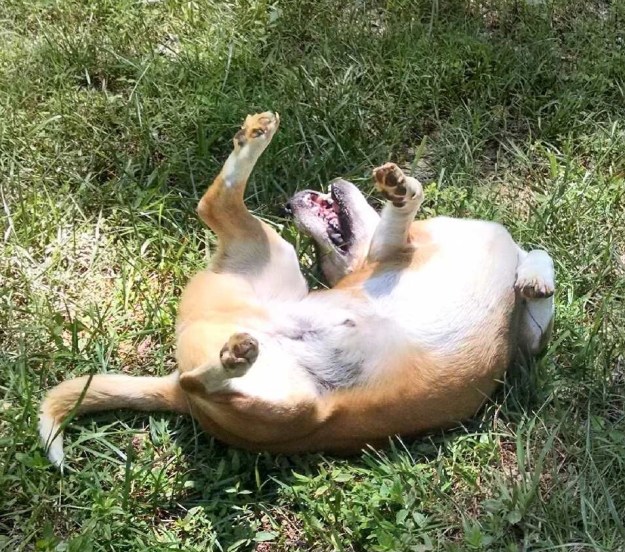
For the month of July, O. Henry magazine kindly published Buster Gets a Bath, which represents one of my more recent poems. Please note that if you were expecting a loftier thought, I apologize. 🙂 Sometimes, like Buster, in the post-bath whirl captured above, you just have to give yourself over to the delicious moment. In his case, he’s just grateful to have survived the bath.

As you continue in your own writing journey, I hope you remember to capture those little moments, reflect briefly on them, and write about them. Yes, it’s a quick fix, it’s instant gratification, but you may find that you’ve just seized a piece of eternity. As they say, the days are long, but the years are short.

So go ahead. Revel in the clover!

Clacking Away in the COVID-19 Quarantine….

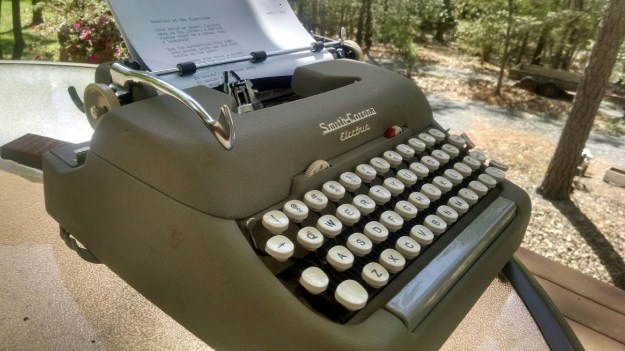
Typos? No problem! Just keep writing…..(Pictured: A 1957 Smith-Corona Electric Portable typewriter)

How are you spending your time these days? If you’re like me, you’re alternating between enjoying brief moments in the sun and trying to write your way through this pandemic.

Today, a terrific advocacy group dedicated to redefining narratives around disability, mental health, and chronic illness kindly published “How a Writer with Multiple Sclerosis Finds Unexpected Gratitude with an Antique Typewriter,” which is my story of how I’m using the extra time to find new ways to think, and hopefully improve my writing.

I’ve set a goal of writing two new poems each day on an old typewriter, and I have to say, it’s very refreshing to just clack away and not worry about typos or grammatical lapses. The kind of things best left to my inner critic, who takes an extended coffee break during these times.

In other news, I was recently honored to be asked to write a monthly marketing column for Women on Writing, my favorite writing community. This column is focused on writing inspiration and market listings for writers of all genres, from poetry to fiction to memoir. The newsletter is free, and if you’d like to start receiving it, you can easily subscribe by entering your email address into the box on the right at the top of the website.

Additionally, I’m taking a training course on the technicalities of teaching online classes, something I’d like to try in the future. As much as I adore leading in-person classes at Central Carolina Community College in Pittsboro, these times cry out for a new way for people to learn from the safety of their homes. And I’m all for that. It might be a stretch for me, but as I’ve learned by experimenting with my typewriters, it’s always good to branch out in some way.

Please stay safe (and sane), and of course, keep telling your story!

Celebrating National Poetry Month!

If we must be home bound during any month of the year, I’m grateful that it’s April. Not just because the dogwoods are in bloom, not just because our baby spinach is unfurling, and not just because our new bees are settling in and falling more in love with their queen every day….

I’m also grateful to be home for National Poetry Month. A friend is sending me a new poem to read every day, and even in this time of COVID-19 inspiration abounds along Whale Tail Road.

Today I’m honored to be Poet of the Day for Gyroscope Review. Fitting, the subject is beauty (orchids) and gratitude.